Titanic II: Oceanic Boogaloo

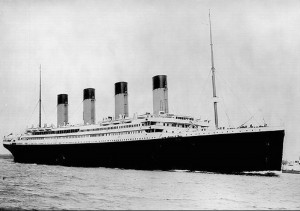
TitanicAll aboard? Back in February, Australian billionaire Clive Palmer held a press conference to announce his plans to build a duplicate of the Titanic—arguably the most famous ocean-liner in history. The original Titanic, billed as “unsinkable,” hit an iceberg in 1912 and sank. Palmer is calling his ship, of course, Titanic II.

Think that might be a bad idea? Of course you do. And you’re not alone. While Palmer promises that Titanic II will have a stronger, more iceberg-proof hull (and way more lifeboats), critics say that the new ship makes a mockery of the hundreds of passengers who died on the original Titanic. Descendants of survivors of the disaster are even passing around a petition to block the construction of Titanic II.

When Celebrities Meet Bad Guys

Former NBA rebounding champion (and all-around weirdo) Dennis Rodman recently made headlines during an ill-advised trip to North Korea to meet its “Supreme Leader,” Kim Jong-un.

While this sounds like a PR stunt or an article from The Onion, Rodman isn’t the first American celebrity to associate themselves with dubious elements. Here are a few more examples.

Patty Hearst. After being kidnapped by a far-left revolutionary group calling itself the “Symbionese Liberation Army,” newspaper heiress Patty Hearst succumbed to the effects of brainwashing and Stockholm Syndrome and willingly helped the SLA rob a San Francisco bank in 1974. Hearst was arrested in 1975 and imprisoned for two years before her sentence was commuted by President Carter.

Habemus Papam! (That’s Latin for “We have a Pope!”)

This week 76-year-old Argentinean Cardinal Jorge Mario Bergoglio was elected pope on the fifth papal conclave vote. Fun fact: Bergoglio, now Pope Francis, is the first pontiff from Latin America. To mark the occasion, here are a few more bits of pope-culture.

Pope vote: The vote usually doesn’t take long. Over the past century, the conclave has never lasted more than five days. Longest on record: 33 months, spanning 1268 to 1271. An angry mob got so fed up with the indecision that they literally tore the roof off the building the college of cardinals was staying in and limited their meals to bread and water to inspire them to pick up the pace. (They picked Pope Gregory X, who reigned for four years.

RIP Alvin Lee

Reuters:

British blues-rock guitarist Alvin Lee, who was best known for his performance with rock band Ten Years After at Woodstock in 1969, died on Wednesday at age 68, his family said.

“With great sadness we have to announce that Alvin unexpectedly passed away early this morning after unforeseen complications following a routine surgical procedure,” the family said in a statement on the singer’s official website.

Ten Years After—”Spoonful”:

Sir Ranulph Fiennes is the Bravest Man in the World

Ranulph FiennesSo you’ve probably never heard of Ranulph Fiennes. No, he’s not the father of actor Ralph Fiennes (they’re actually third cousins). All you need to know about him is that he’s one of the most fearless—and curious—people on Earth. It’s even official. In the 1980s, Guinness World Records named the British writer/adventurer/knight/politician “The World’s Greatest Living Explorer” by the Guinness Book of World Records. Now nearly 70, Fiennes continues to embark on incredibly dangerous expeditions. His many adventures could easily fill a dozen biographies, but here are a choice few.

6 People Who Rejected Awards

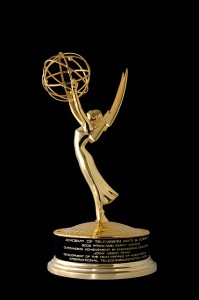
We’re right in the middle of Awards Season. Last month Pulitzer and Nobel Prizes were awarded, followed by the Golden Globes, and in the next few weeks, we’ll see the Emmys and Oscars. And while most artists and performers would be thrilled to get any one of these awards, there’s always the occasional grump who gets a prize from his/her peers and says “no thanks.” Here are a few prize examples of people who rejected awards.

Ving Rhames. In 1998, the actor won the Golden Globe for Best Actor in a made for TV movie or miniseries for his title role in HBO’s Don King: Only in America. When he went on stage to receive his award, he turned it down, and, in the spirit of “giving,” gave the trophy to fellow nominee Jack Lemmon, nominated for 12 Angry Men. Lemmon said it was “one of the sweetest moments of his life.” Rhames insisted Lemmon keep the award; the Globes’ governing body later quietly had a second trophy sent to Rhames.

The Last Living Veteran of World War One

Please meet Mrs. Florence Green (this article is from February):

The revels were not quite as wild as on Armistice Day. Still, there was plenty to celebrate yesterday when the world’s last surviving female veteran of the First World War celebrated her 110th birthday.

Florence Green, from King’s Lynn, Norfolk, was 17 years old when she joined the Women’s Royal Air Force, in the late summer of 1918.

She looks good! 110? Wow!

Imagine telling the good Florence when she was still a young woman in the 1920s, “Hey Flo, you’re going to have your own Wikipedia page some day!” She’d be like, “Umwut? LOL.”

Gander

In 2002, in Uncle John’s Ahh-Inspiring Bathroom Reader, we wrote about what happened in a little Canadian town called Gander in the aftermath of the attacks of 9/11. It’s the kind of story we can all use on a day like today.

GANDER

Far too few people know the heartwarming story about what
happened in a small town on a remote island in the North Atlantic on
September 11, 2001. Canadian air traffic controller (and BRI member)
Terry Budden told us about it, and we decided to share it with you.

98-year-old Gets 10th-degree Judo Blackbelt

Impressive:

Just two years before her 100th birthday, Sensei Keiko Fukuda has  become the first woman to achievea tenth-degree black belt—the highest rank in the martial art and combat sport Judo. Fukuda is now one of only four living people who’ve earned the tenth-degree (or dan) black belt. To put the accomplishment into better perspective, throughout history, only sixteen people have ever achieved this honor.

RIP: Hazel Dickens

We just heard today that the great bluegrass singer and true American treasure Hazel Dickens passed away on Friday.

“Hazel Dickens, a West Virginia-born bluegrass singer who was an authentic voice of America’s working class, has died in Washington at 75.

Ms. Dickens grew up in dire poverty in West Virginia’s coal country and developed a raw, keening style of singing that was filled with the pain of her hardscrabble youth. She supported herself in day jobs for many years before she was heard on the soundtrack of the 1976 Oscar-winning documentary about coal mining, ‘Harlan County, U.S.A.’

Her uncompromising songs about coal mining, such as ‘Black Lung’ and ‘They Can’t Keep Us Down,’ became anthems, and she was among the first to sing of the plight of women trying to get by in the working-class world.”

Get your chills ready, and listen to this:

Last Shot of the Civil War: Fired in Alaska

Crazy story for you history nuts out there:

The 150th anniversary of the first shot of America’s deadliest conflict has been widely noted this month. Few people are aware, however, that the last shot was fired off Alaska’s shores.

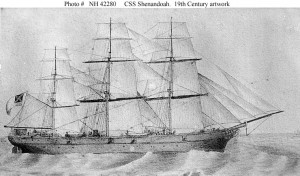
It was fired by the Confederate ship CSS Shenandoah, at the end of its mission to disrupt Yankee maritime business all over the world. And where did they get the ship?

In October 1864, it [the ship] was secretly transferred to the Confederate Navy in a black-ops rendezvous off the coast of Africa. A skeleton crew rigged the ship for battle and renamed it Shenandoah.

I can see the movie now! Mel Gibson as the skipper! (Is that wrong?)

Was the ship successful?

The Pearl Harbor Spy

Today, December 7, 2010, is the 69th anniversary of the Japanese attack on Pearl Harbor. (69th?! Wow!) In our very latest—and many are already saying the greatest, thank you very much—work, Uncle John’s HEAVY DUTY Bathroom Reader, we tell the story of the single Japanese spy who made the entire attack possible. Here’s an excerpt:

DUSTBIN OF HISTORY:
THE PEARL HARBOR SPY

The Japanese attack on Pearl Harbor on December 7, 1941, remains
one of the most infamous events in U.S. history. Yet the spy who
played a key role in the sneak attack is a forgotten man,
unknown even to many World War II buff
s.

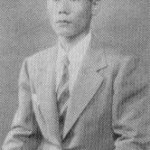
Under Cover
On March 27, 1941, a 27-year-old junior diplomat named Tadashi Morimura arrived in Honolulu to take his post as vice-consul at the Japanese consulate. But that was just a cover—“Morimura” was really Takeo Yoshikawa, a Japanese Imperial Navy Intelligence officer. His real mission: to collect information about the American military installations in and around Pearl Harbor.