Just about every country on the planet has some kind of national day. These public holidays involve citizens celebrating their country’s heritage and traditions. The observance date is often placed on a day that the country became independent of another country: America, for example, has Independence Day (July 4th), Canada has Canada Day (July 1st), and Macedonia has Den na Nezavisnosta (Sept. 8th). And these holidays almost always involves fireworks. Why? Because everybody loves fireworks.
Germany has a national holiday, too, but unlike those other countries, they celebrate unification, not separation. Tag der Deutschen Einheit, literally “German Unity Day,” falls on October 3rd and observes the day in 1990 that West Germany and East Germany combined back into a single Germany after more than three decades of separation.
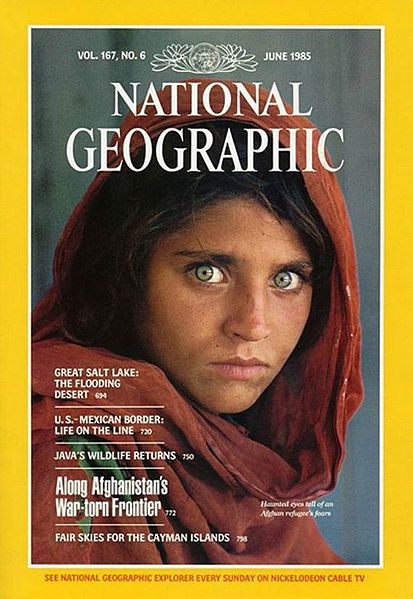
In December 1984, a National Geographic photographer named Steve McCurry visited the Nasir Bagh refugee camp on the Afghan/Pakistan border while covering the war between the Soviet Union and Afghanistan. While there he snapped a photograph of a 12-year-old girl with haunting blue-green eyes. The girl had been living in the camp ever since Soviet helicopters had bombed her village five years earlier, killing both her parents.
McCurry didn’t have a translator with him that day, so he never got the girl’s name. But the photograph, which appeared on the cover of the June 1985 issue, went on to become the single most recognized photograph in National Geographic’s 125-year history and one of the most reproduced images in the world.
First restaurant to note GMOs: In 2013, the Mexican fast-food chain Chipotle became the first chain to adopt a policy to note on its menu what of its ingredients were of “genetically modified origin.” The only ingredient, so far: soybean oil, used to cook meat.
First green salad: The prime rib restaurant Lawry’s opened in Beverly Hills in 1938. One of the their hallmarks was, and still is, tableside service—an employee wheels a cart to your table and carves off a slab of prime rib (as that was once the only entrée offered). But before the meal, another employee wheels another cart around, table to table, and tosses fresh green salads for guests. Included in the price of the meal, this was the first time an American restaurant offered a salad course.
First restaurant to accept bitcoin: “Bitcoin” is an electronic currency, invented in 2010 by Satoshi Nakamoto, used exclusively over the Internet. And now, at least one place in the “real world.” In 2013, Bubba’s Firehouse Barbecue in Salt Lake City, Utah, started accepting bitcoin as a form of payment. (The owner is a big fan and online user of bitcoin.)
Back in 1981, Atari was the world leader in video games. In 1983 Nintendo offered to sell Atari the licenses to their Famicom game system, but they couldn’t come to an agreement, so Nintendo decided to go it alone.
They renamed the American version the Advanced Video System (AVS) and in January 1985, introduced it at the Consumer Electronics Show in Las Vegas, one of the largest such trade shows in the world.
They didn’t get a single order.
Nintendo’s problem wasn’t so much that the AVS was a bad system, but more that the American home video game industry was struggling. After several years of impressive growth, in 1983 sales of video game consoles and cartridges suddenly collapsed without warning. Video game manufacturers, caught completely off guard, lost hundreds of millions of dollars as inventory piled up in warehouses, never to find a buyer. Atari’s loss of $536 million prompted Warner Communications to sell the company in 1984.
Mattel sold off its version, Intellivision, the same year and shut down their entire video game division. Many other companies went out of business.
Have you heard of one James McIntyre? His unusual verses set the world afire. Think of this while eating your Cheerios: In the 1800s, he was the bard of southwestern Ontario. His work is published this day still, If you read his poems, they’ll make you ill.
ABARD IS BORN
James McIntyre (1827–1906), known to his admirers as the “Chaucer of Cheese,” was born in the Scottish village of Forres. He moved to Canada when he was 14 and lived most of his life in Ingersoll, a small town in Ontario, where he worked as a furniture and coffin maker. But what earned him his reputation was his hobby—writing poetry. McIntyre wrote poems on a variety of topics: He described Ontario towns, saluted his favorite authors, and sang the praises of farming and country life. He even composed tributes to his furniture.
Toilets were developed around the world, independently, thousands of years ago, but archaeologists keep finding older and older prototypes in Scotland. One of the oldest was found by archaeologists in the 1850s at Skara Brae, an ancient settlement on Mainland, the largest of the Orkney Islands off the coast of Scotland. Several stone huts among the ruins contained drains that extended outside their walls. Historians believe that the huts, which date back to 3,000 BC, were one of the first, if not the first, indoor bathrooms on Earth.
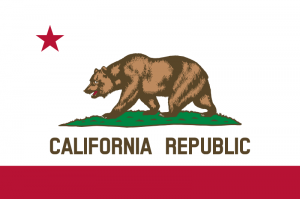
How much do you know about California’s highest, lowest, oldest, largest, and smallest stuff?
TALLEST LIVING THING: Hyperion, a 379-foot Sequoia (California redwood) tree located in the Redwood National Park near Eureka. Hyperion’s location in the park is kept secret to prevent it from being damaged by tourists.
SMALLEST MOUNTAIN RANGE: The Sutter Butte Mountain Range near Yuba City. The buttes are a circular volcanic outcropping just 10 miles in diameter.
OLDEST LIVING TREE IN NORTH AMERICA: A 4,842- year-old bristlecone pine in Inyo National Forest outside Bishop.
Named Methuselah (after the oldest person whose age is referenced in the Bible), this pine was a seedling during the Bronze Age, when the Pyramids were going up in Egypt.
LARGEST LIVING TREE: General Sherman, a giant sequoia in Sequoia National Park, east of Visalia. Named for Civil War general William Tecumseh Sherman, this tree weighs more than 2 million pounds, is 275 feet tall, and is the largest tree on earth when measured by its estimated volume of 52,513 cubic feet.
BIGGEST SOLITARY BOULDER: Giant Rock in Landers in the Mojave Desert. At about seven stories high, it weighs more than 23,000 tons.
LONGEST RUNWAY: At Edwards Air Force Base in the Mojave Desert. It’s 7.5 miles long, and the first space shuttle landed there.
WORLD’S TALLEST ONE-PIECE TOTEM POLE: Built in 1962, the brightly painted 160-foot-tall pole in the McKinleyville Shopping Center was designed by Ernest Pierson, who carved it from a single 500-year-old redwood.
OLDEST CONCRETE BRIDGE STILL IN USE: Fernbridge in Humboldt County. Built in 1911 of reinforced concrete, it crosses the Eel River and is 1,450 feet long.
HIGHEST LANDING PAD ON A BUILDING: The U.S. Bank Tower in downtown L.A. is 1,018 feet high, making it the world’s tallest building with a helipad on the roof. It’s also America’s tallest building west of Chicago.
NORTH AMERICA’S BEST VIEW OF THE WORLD: The 3,849-foot summit of Mt. Diablo in Contra Costa County. It reveals more of the earth’s surface than any other peak in the world, except Mt. Kilimanjaro in Africa. Mt. Diablo looks west to the Farallon Islands in the Pacific, east to the Sierra Nevada mountain range, south to the Santa Cruz Mountains, and north to the Cascades.
NORTH AMERICA’S HIGHEST CONCENTRATION OF LAVA TUBE CAVES: Lava Beds National Monument near Tulelake.
Catcher in the Rye author J.D. Salinger was as famous for being a recluse who never published much after his famous 1951 novel as he was for that seminal book. After Salinger died at age 91 in 2010, there was wide speculation that if he’d been writing during all those years holed up in his house in New Hampshire, scores of books might finally see the light of day. And now, they are. Salinger’s estate has been settled, and it includes detailed instructions regarding how he wanted five completely unseen books to be released.
Fans have wondered for years what those books might be, and Uncle John is no exception. In Fake Facts, our book of completely made-up and silly trivia that sounds true but isn’t, we included a piece about imaginary lost works of Salinger called “The Salinger Vault.” Can you guess which of the following are books from the real Salinger vault that will soon be published …and which came from the phony Salinger vault in Fake Facts?
RECLINER. Reuben John Smith (d. 1899) liked to relax in life, so he asked that his eternal resting place be a leather recliner and that a checkerboard be placed in his lap. (Smith also asked to be buried with a key to his tomb in case the undertakers made a mistake.)
WHISTLE. In To Have and Have Not (1944), Lauren Bacall delivers a famous line to real-life future husband Humphrey Bogart: “You know how to whistle, don’t you, Steve? You just put your lips together…and blow.” After Bogart was cremated, Bacall put a golden whistle in the urn with his ashes.
PIPE AND TOBACCO. Sixteenth-century explorer Sir Walter Raleigh is credited with popularizing tobacco smoking in England, a habit he picked up on his travels to the New World. His last request before being executed for treason in 1618: one final smoke. Raleigh’s will provided for “ten pounds of tobacco, and two pipes” for any smoker who attended his funeral, and requested that he be buried with his favorite pipe and some tobacco, in a coffin lined with wood from his cigar boxes.
DRUM. This word comes from the Middle Dutch term tromme, which is believed to be onomotopaeic in origin. It became the English drum, as a noun, in the early 1500s.
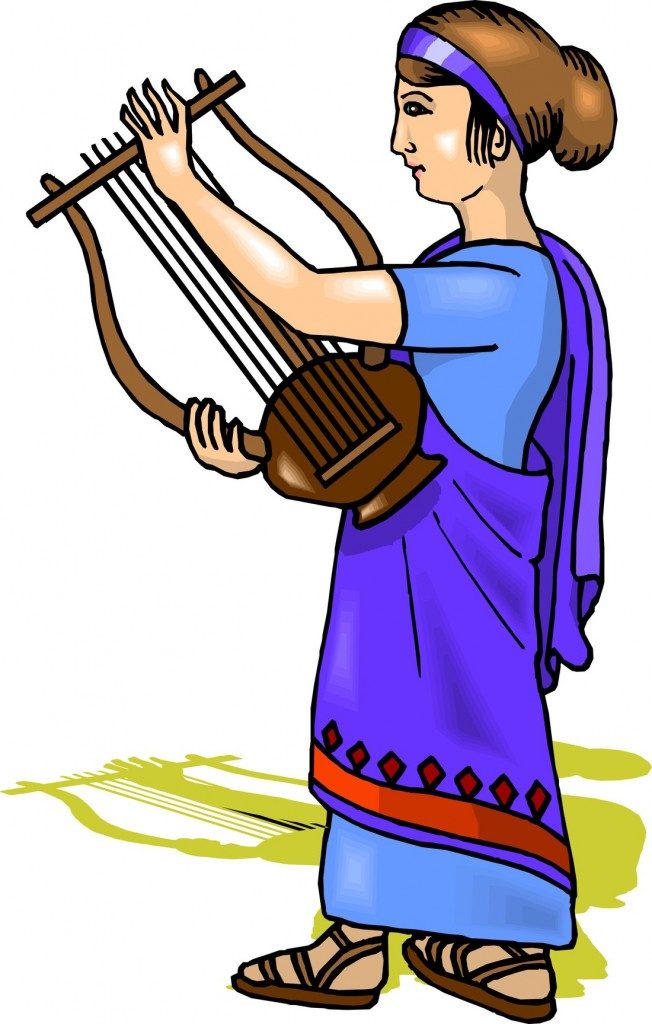
PSALM. The old Greek verb psallein meant “to pluck a stringed instrument.” That became psalmos, which meant something along the lines of “the sound of a harp,” and then came to mean a song, especially a sacred song of the Jewish tradition, as in the psalms of King David.
DOO-WOP. This music style, begun in the 1950s and characterized by rich vocal harmonies, was named for the nonsense syllables sung behind the lead. First song that actually had the phrase “doowop” in it: “When You Dance,” a 1955 hit by the Turbans. It didn’t become an official word, however, until 1969.
A few years after D-cell batteries were invented in 1896 came the first battery-powered hand lights. The first one— called the “Electrical Hand Torch”—was invented by American Conrad Hubert. Because early batteries were weak and the contacts faulty, the lights flashed a lot, hence the name “flashlight.”
Even after the batteries and contacts were improved, the name stuck. (In the U.K., flashlights are still referred to as “torches.”)
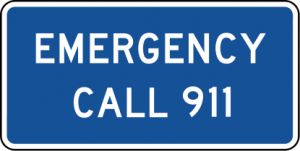
THE 911 EMERGENCY CALL SYSTEM
The 999 emergency phone number was set up in England after a 1937 house fire killed five people. It wasn’t until 1967 that the FCC and AT&T worked together to create the system in the United States. They chose “911” because “999” took too long to dial on a rotary phone. But AT&T was taking a long time to implement the system, so Bob Gallagher, president of the Alabama Telephone Company, ordered his plant manager, Robert Fitzgerald, to set up the nation’s first 911 service in Haleyville, Alabama. By the mid-1970s, most of the U.S. could dial 911.
The Western holiday of Valentine’s Day has its roots in a martyred Catholic priest who performed marriages when they were illegal. It also incorporates elements of Roman mythology, particularly Cupid, the Roman god of love.
China operates from different historical and mythological traditions, so it celebrates Chinese Valentine’s Day in a completely different way and at a completely different time. Instead of February 14, China has the Qixi Festival, or the Magpie Festival, celebrated in the summer, and this year it’s on August 13.
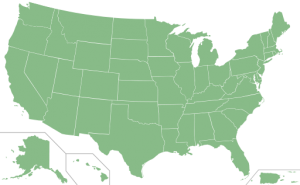
Puerto Rico? Puerto Rico sends a representative to Congress (although they don’t get to vote, and its residents pay federal income tax and may join the U.S. Armed Forces. Puerto Ricans are classified as U.S. citizens, but cannot vote in a presidential election. Reason: The island is a U.S. territory, not a state. At least not yet. In 2012, the island held a referendum regarding statehood. A whopping 61 percent of voters said they were in favor of becoming the 51st state, and legislation was drawn up and sent to President Obama and Congress in May 2013.
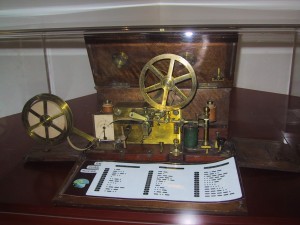
In less than a week, the last telegram will be sent. The telegraph was the world’s first mass communication tool. First developed in the 1840s, sending series of electric pulses in Morse code (different combinations of pulses that corresponded to letters of the alphabet) along long stretches of electrical wire made instant communication a reality. The first telegram, sent on May 24, 1844, read, “WHAT HATH GOD WROUGHT?”
While the ale that was enjoyed centuries before the birth of Julius Caesar may have been tastier than other beverage choices of the day, it was still incredibly sour, with a flavor closer to vinegar than Hefeweizen. That’s according to a team of University of Chicago archaeologists and brewers from the Great Lakes Brewing Company. Using a 5,000-year-old beer recipe outlined in “Hymn to Ninkasi,” an ode to the Sumerian goddess of beer, they brewed up a batch of era-appropriate beer. To help ensure authenticity, they even used recreations of ancient wooden tools and ceramic fermentation pots based on artifacts found in Iraq in the 1930s, malted the barley on a roof, and hired a baker in Cleveland to prepare the bappir (“beer bread”) they used as the source of their yeast. And they heated the beer during the brewing process the old fashioned way: over a manure-fueled fire.
Here is a special nod to our friends north of the border. May you have a fantastic Canada Day. There is no better way to celebrate than to learn more about Canada. Here is a story from Uncle John’s Fast-Acting, Long-Lasting Bathroom Reader.
The Oxford English Dictionary is the de facto official record of the English language. Like every living language, English is constantly evolving, with new words seemingly entering the vernacular everyday—most of them slang phrases, computer and Internet terms, or portmanteaus, which are new words combined out two or more existing words.
Whenever the OED is updated, usually each June, editors announce the newest words added to the 800,000 word-plus dictionary. They’re not super-new—they’re generally words that have been around for about 10 years and are still common. This year, OED editors added more than 1,200 new words to the dictionary, and, by extension, officially to English. Here are some notable additions.
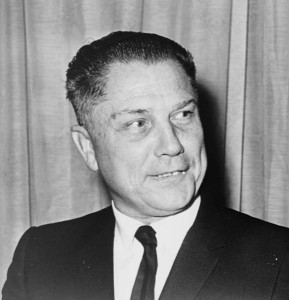
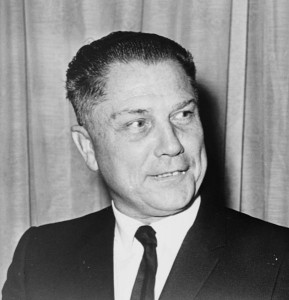
Jimmy Hoffa was a well-known union leader in the 1960s and ’70s, but he’s far more famous for being a missing person (and maybe for his ties to organized crime). On July 30, 1975, Hoffa had dinner at the Raleigh House Restaurant in suburban Detroit. Then he completely disappeared. After no trace of him showed up for seven years, he was declared legally dead in 1982. But nearly 40 years later, federal agents—and conspiracy theories—are still looking for him. Here’s a brief timeline of the very long search.



 Just about every country on the planet has some kind of national day. These public holidays involve citizens celebrating their country’s heritage and traditions. The observance date is often placed on a day that the country became independent of another country: America, for example, has Independence Day (July 4th), Canada has Canada Day (July 1st), and Macedonia has Den na Nezavisnosta (Sept. 8th). And these holidays almost always involves fireworks. Why? Because everybody loves fireworks.