
Impossible Questions: Award-Winning Days in History Edition (Answers)

Think you know the answers from yesterday’s challenge? Here they are.

What important award was handed out on June 8, 1880?

On June 8, 1880, the brand of flour now known as Gold Medal Flour won its titular gold medal. the Washburn Crosby Company, a grain mill and flour distributor, entered three different grades of flour into the first annual International Millers’ Exhibition. Washburn Crosby’s three flours swept the awards, winning the gold, silver, and bronze medals. The gold-medal winning flour, previously known as Washburn’s Superlative Flour, changed its name to reflect its gold-winning status. Since August 1880, its been distributed under that name, although General Mills has since bought out Washburn Crosby. Gold Medal is the bestselling flour in the United States.

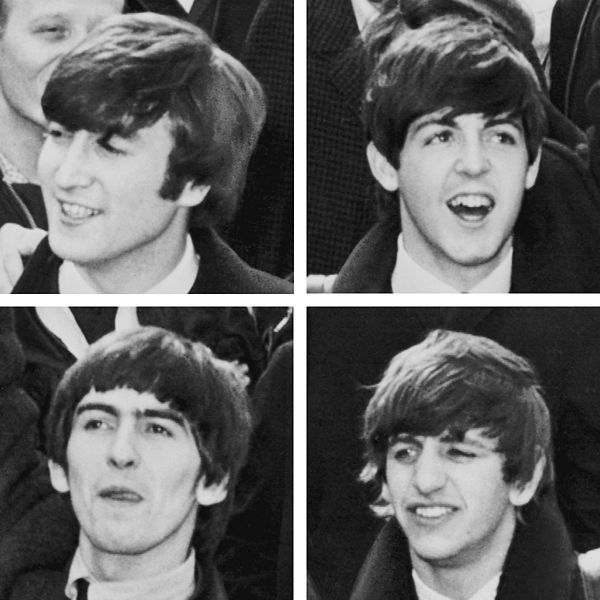
The Beatles on “Ed Sullivan”: A Really Big Show

On February 9, 1964, Beatlemania took the U.S. by storm—that’s the night the Beatles played for the first time on the top-rated The Ed Sullivan Show. Here’s a look at that iconic episode, which aired 50 years ago this week.

Ed Sullivan ShowThe Ed Sullivan Show was a variety show, and the Beatles were one of the first times the show had booked a rock n’ roll act. The rest of the show’s running time was filled with the usual array of Sullivan performers: comedians, performances from a Broadway musical, and even a magician.

And the Oscar Goes To…Who?

Why were these Academy Award winners and nominees so unlikely? Because they’d never done any acting before that one big role.

side_oscarJennifer Hudson

Hudson auditioned for the 2004 season of American Idol, having spent a few months as a singer in a stage show on a cruise ship. She ultimately finished the reality competition in seventh place, but in 2006 she was cast as Effie in the 2006 film adaptation of the Broadway musical Dreamgirls. Playing a founding member of a ‘60s girl group who’s later kicked out of the act, Hudson was cast for her ability to belt out the show’s signature song, “And I Am Telling You I’m Not Going.” It was the first professional acting of Hudson’s life, but the performance won her the Academy Award for Best Supporting Actress.

The Official Toilets of the 2014 Winter Olympic Games

You’d better not be bashful if you’re planning to attend the Winter Olympics in Sochi. Going to the bathroom will practically be a team event in and of itself.

_72452231_seeing-doubleRecently, BBC correspondent Steve Rosenberg took a tour of The Laura Cross-Country Ski and Biathlon Center, one of the venues that will be used during this year’s Winter Olympics in Sochi, Russia. He went to use the men’s room and was surprised by what he found inside. In addition to a sink and a paper towel dispenser, not unlike the ones you’d find in any of a million restrooms around the world, Rosenberg discovered two potties sitting side-by-side.

But What’s On After the Super Bowl?

After spending six hours on the pregame, the game, and the postgame, what’s the best way to unwind after a long day of watching TV? Watching more TV!

After Superbowl• In the early years of the Super Bowl, the game was played and broadcast earlier in the day, not in primetime. Nor was it the TV event or near-holiday it is today. Now the game coverage ends around 10:30 p.m. eastern time, and subsequently earlier in the western time zones. This gives the network airing it (it rotates among the Big 4 broadcast channels each year) an ample opportunity to present a new show or expose an existing show to a potentially huge audience. The concept began in earnest in 1984, when NBC used its post-Super Bowl advantage to help launch The A-Team.

Trivia Quizzes

Fact-or-Fake Friday or Fight!

FactOrFake Logo 1Here are three weird news items from the past few weeks. Two of them are true, and one of them we just made up. Take a guess, and check the answers below to see if you’re right.

Evolution of the Super Bowl Halftime Show

More than 40 years after the first Super Bowl broadcast, the halftime show is no longer just something to fill TV airtime while the football players rest—it’s now a spectacle unto itself.

Super Bowl Halftime Show1967: Marching bands from the universities of Arizona and Michigan perform.

1970: The NFL experiments with big-name celebrity halftime entertainers. Their first big star: Carol Channing.

1972: “A Salute to Louis Armstrong,” with Ella Fitzgerald, Al Hirt, the U.S. Marine Corps Drill Team…and Carol Channing. Armstrong had died the previous summer. Songs included “High Society” and “Hello, Dolly.”

Quick Facts About Super Bowl Commercials

Admit it: You only watch the game for the ads. Here are some facts about Super Bowl commercials.

Super Bowl Commercial Facts• Since 1989, USA Today’s Super Bowl Ad Meter has tracked which of the game’s commercials most resonated with viewers. Once done with focus groups during the game, voting is now conducted online in real time. Some past winners include Diet Pepsi’s 1991 commercial with Ray Charles singing “You Got the Right One Baby,” and a 1992 Nike ad in which Michael Jordan and Bugs Bunny play a basketball game on Mars against Marvin the Martian (which directly inspired the 1996 movie Space Jam). From 1999 to 2008, a commercial for Budweiser of Bud Light took the Ad meter honors.

“This Next Song Is About…Me!”

Musicians often write songs about other musicians—the Commodores’ “Night Shift” is about Jackie Wilson, for example. And sometimes, the musicians who had songs written about them cover those very songs.

Songs about Me• The Barenaked Ladies’ hit “Brian Wilson” isn’t the most respectful song about the songwriter and major creative force behind the Beach Boys. The song references Wilson’s period in the ‘70s when agoraphobia, drug addiction, and obesity kept him housebound. The chorus of “Brian Wilson” is: “lying in bed / just like Brian Wilson did.” Still, Wilson thought “Brian Wilson” was a pretty good song. When he began recording music and touring again in the 1990s, he made the song part of his set list. A version appears on his 2000 live album Live at the Roxy Theatre.

The World’s Most Expensive Movie Props

Movies cost a lot of money—
it’s expensive to build sets, pay actors, and occasionally, a single prop.

The purse

expensive movie propsThe films of Woody Allen earn critical acclaim, but they are usually modest commercial hits, with subsequently small production budgets. Allen’s latest, Blue Jasmine, is about a wealthy woman forced to live modestly after her husband is imprisoned for financial crimes. The one vestige of Jasmine’s (Cate Blanchett) formerly glamorous life is a tan purse.

The Original Dungeon Masters

As Dungeon & Dragons turns 40 years old, here is a look back at
the history of how this game came to be.

History of Dungeons and DragonsROLLING THE DICE

Gary Gygax (pronounced GHEE-Gax) was an insurance underwriter living in Lake Geneva, Wisconsin, in the late 1960s. He made his living calculating the probabilities that an individual seeking to buy insurance would become sick or disabled or die, and he used these estimates to set the premiums and payouts on the policies he reviewed. Every policy was like a roll of the dice: If Gygax calculated correctly, the individual received sufficient coverage at a fair price, and the insurance company had a good shot at earning a fair profit. If he was incorrect, either the individual or the insurance company would lose.

2016 Summer Olympics Wrapup

4 Tales of Winter Olympics Almost-Glory

Olympic Duds

The 2014 Winter Olympics are just around the corner. They’re sure to offer plenty of triumphs, but for every Brian Boitano, there’s a Tonya Harding. Here are some other spectacular Olympic duds.

When Did “The Present” Begin?

It’s a harder question than it sounds. Does the present refer to right this second?
Today? This year? The past few years? Fortunately, science has the answer.

The PresentDifferent scientific disciplines, cultures, and religions base their calendars on different “zero” moments. In geology, as well as other scientific disciplines, the epoch of time referred to as “the present” began on January 1, 1950. It’s a somewhat arbitrary, compromise of a date, but a fixed moment in the study of things that takes a really, really long time to change or move.