
Once Again, It’s Fact-or-Fake Friday
Three news items. Two are weird, and also true. One is weird…and not true at all. Can you spot the fake? Check your answer at the end.


Three news items. Two are weird, and also true. One is weird…and not true at all. Can you spot the fake? Check your answer at the end.
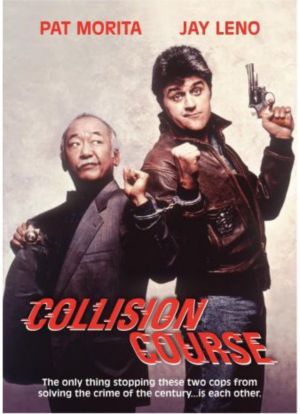
Besides hosting The Tonight Show, what do Jay Leno and Jimmy Fallon have in common? A failed movie career.
Leno was one of the most popular stand-up comedians in America in the 1970s and ’80s, eventually earning a spot as one of Johnny Carson’s permanent substitutes for when the longtime Tonight Show host took one of his many vacations or contractually obligated days off. Leno took over The Tonight Show for good when Carson retired in 1992. That was a lucky break for Leno—outside of The Tonight Show and standup, his side career as a film actor was dead in the water.

Have you got the answer “pinned down”? Read on.
All three guys are very famous professional athletes, and all are enshrined in a hall of fame…just not in the one for the sport that they played professionally for years.

Europe’s attention is currently focused on snowboarding, figure skating, and other Olympic events. Typically the continent’s sports fervor, and airwaves, are devoted to some much goofier competitions.
Think you know what bizarre achievement links these three famous athletes? Come back tomorrow to see if you’re right.

Got some bad memories you’d rather not remember? Very soon, you might be able to get rid of them.
We’ve all got memories that we’d love to wipe away—a soured romance, an embarrassing presentation, or, if you’re the city of Denver, Super Bowl XLVIII. If only there was a pill that could erase bad memories of those events.
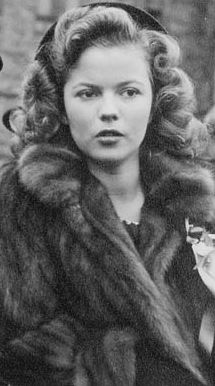
Shirley Temple Black, passed away last night. She was an uplifting light during difficult years in US history. President Franklin Delano Roosevelt said during the depression that “as long as our country has Shirley Temple, we will be all right.” In her memory, we look back at some facts about her life.

And you thought your college roommate was bad.
Amou Haji is eighty years old. He lives in Iran. And he hasn’t bathed since the Eisenhower administration. After experiencing a series of devastating setbacks as a young man several decades ago, Amou Haji decided to become a hermit. He currently resides outside of Dejgah, a rural village in southern Iran. Why isn’t he eager to practice basic hygiene? It’s because Haji believes that cleanliness causes people to get sick.

Uncle John knows pretty much everything—and for what he doesn’t know, he has a massive research library. So go ahead: in the comments below, ask Uncle John anything. (And if we answer your question sometime, we’ll send you a free book!)

Fifty years ago, The Beatles landed in the United States and their fame has never left. The Beatles were the first, the best, or the most at a lot of things, but even within the band, there were singular achievements.
Three news items. Two are weird, and also true. One is weird…and not true at all. Can you spot the fake? Check your answers below.
Think you know the answers from yesterday’s challenge? Here they are.
On June 8, 1880, the brand of flour now known as Gold Medal Flour won its titular gold medal. the Washburn Crosby Company, a grain mill and flour distributor, entered three different grades of flour into the first annual International Millers’ Exhibition. Washburn Crosby’s three flours swept the awards, winning the gold, silver, and bronze medals. The gold-medal winning flour, previously known as Washburn’s Superlative Flour, changed its name to reflect its gold-winning status. Since August 1880, its been distributed under that name, although General Mills has since bought out Washburn Crosby. Gold Medal is the bestselling flour in the United States.

On February 9, 1964, Beatlemania took the U.S. by storm—that’s the night the Beatles played for the first time on the top-rated The Ed Sullivan Show. Here’s a look at that iconic episode, which aired 50 years ago this week.
 The Ed Sullivan Show was a variety show, and the Beatles were one of the first times the show had booked a rock n’ roll act. The rest of the show’s running time was filled with the usual array of Sullivan performers: comedians, performances from a Broadway musical, and even a magician.
 Can you guess the significance of the following two historical dates? Think hard—the answers might be in your kitchen—and come back tomorrow to see if you were right.

Do remarkable sports achievements exist in a vacuum?
 The Bills are the only team to ever make it to four consecutive Super Bowls. However, that achievement is overshadowed by the fact that the Bills also lost all four of those Super Bowls.
Prepare for the opening ceremonies this Friday, with some fascinating facts about the Winter Olympics. Have an ice day.
 • The 2014 games are officially known as the XXII Olympic Winter Games. It’s the 22nd edition. The first took place in Chamonix, France, in 1924, just 28 years after the first modern-day Summer Olympics took place in Athens in 1896.
Why were these Academy Award winners and nominees so unlikely? Because they’d never done any acting before that one big role.
 Jennifer Hudson
Hudson auditioned for the 2004 season of American Idol, having spent a few months as a singer in a stage show on a cruise ship. She ultimately finished the reality competition in seventh place, but in 2006 she was cast as Effie in the 2006 film adaptation of the Broadway musical Dreamgirls. Playing a founding member of a ‘60s girl group who’s later kicked out of the act, Hudson was cast for her ability to belt out the show’s signature song, “And I Am Telling You I’m Not Going.” It was the first professional acting of Hudson’s life, but the performance won her the Academy Award for Best Supporting Actress.
You’d better not be bashful if you’re planning to attend the Winter Olympics in Sochi. Going to the bathroom will practically be a team event in and of itself.
 Recently, BBC correspondent Steve Rosenberg took a tour of The Laura Cross-Country Ski and Biathlon Center, one of the venues that will be used during this year’s Winter Olympics in Sochi, Russia. He went to use the men’s room and was surprised by what he found inside. In addition to a sink and a paper towel dispenser, not unlike the ones you’d find in any of a million restrooms around the world, Rosenberg discovered two potties sitting side-by-side.