Earlier this year, United Nations secretary-general Ban Ki-Moon, along with a coalition from Singapore, introduced a resolution to declare November 19th the first “World Toilet Day.” That sounds lighthearted or silly, but then maybe here in the U.S. we take for granted our widespread sanitation and consistent access to toilets. Worldwide, the lack of sanitation and toilets is a public health crisis. “Sanitation is central to human and environmental health,” Ban said. “It is essential for sustainable development, dignity, and opportunity.” In other words, it’s a basic human right that a lot of humans do not get to enjoy.
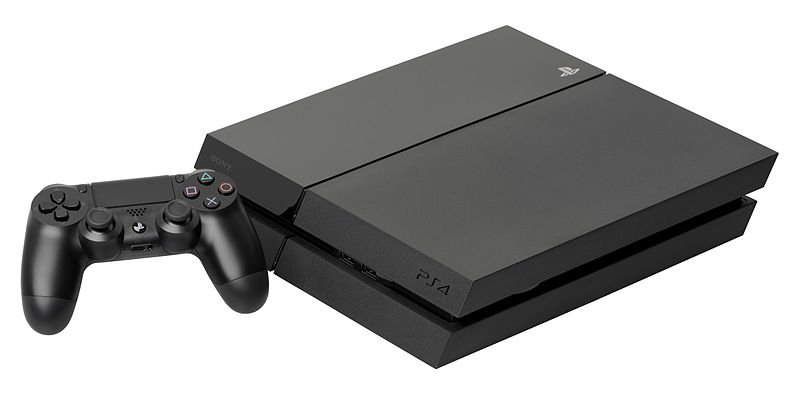
The PlayStation 4 just came out, so here’s some trivia about the first three: 5 facts about PlayStation.
• In the late ‘90s, Sony manufactured the audio processors for the Super Nintendo system. Seeing how much money Nintendo was making, the company decided to make its own system. At the same time, it was working with Phillips Electronics to improve CD-ROM technology. Sony figured out how to run data, graphics, and audio from a CD-ROM simultaneously and super-fast. Result: It could put highly advanced video games on discs, a gaming first. Disc games are also much cheaper to manufacture than cartridges, the traditional delivery method for video games.
• Video game industry analysts predicted the PlayStation to fail shortly upon its release in 2000. Why? Because at that point, only software manufacturers like Nintendo and Sega had successfully launched a video game console. Strictly electronics companies, like Sony, had a long history of releasing flop systems, such as RCA’s Studio II, Fairchild’s Channel F, and Magnavox’s Odyssey.
• Humans began cultivating roses only about 5,000 years ago, in China and the Far East. But they’ve been used and enjoyed by humans for much longer than that. Ancient Egyptian mummies have been discovered wearing rose wreaths. Fossilized rose remnants have been found that date back 35 million years.
• A rosebush blooms on the wall of Hildesheim Cathedral in Germany. It started growing at about the same time the church was built, around 1010, making it the oldest living rosebush on the planet.
• In the early 1800s, Empress Josephine of France engineered the first modern-day “rose garden.” She had a lofty goal—a sample of every rose variety in the world. Her gardens at the Malmaison château housed 250 varieties of roses—helped along by a standing order to the French Navy to confiscate any rose plants or seeds found on enemy ships.
• Josephine’s garden made rose growing and collecting very popular in western Europe. In the mid-1800s, gardeners figured out how to crossbreed roses, to combine, for example, one rose’s color with another’s heartiness. The first major hybrid rose: “La France,” developed by grower Jean-Baptiste Andre Guillot in 1867. Today there are over 10,000 hybrid rose varieties.
• While it probably didn’t have every rose in the world, Josephine’s was the largest rose collection in the world until the opening and rapid growth of the Europa-Rosarium in Sangerhausen, Germany, in 1902. As of 2013, it houses 75,000 rose varieties.
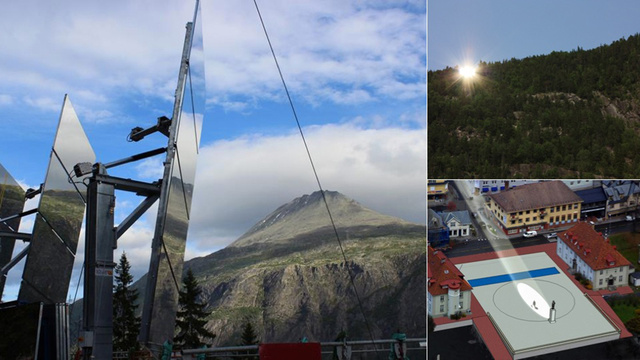
Seven months of near darkness can get anybody down, as well as deprived of Vitamin D. Fortunately for the residents of Rjukan, there’s a high-tech cure for the wintertime blues.
Nearly seven months of that kind of gloom can get anybody down, even Vitamin D deprived Norwegians that are accustomed to harsh winters. Fortunately for the residents of Rjukan, there’s a solution. At a cost of 5 million Norwegian Kroner (roughly $841,000 in US dollars), three 183-square foot mirrors were installed on a cliff overlooking the town. On clear days – which are unable to discern from the ground in Rjukan – the mirrors reflect the sunlight down into the town square.
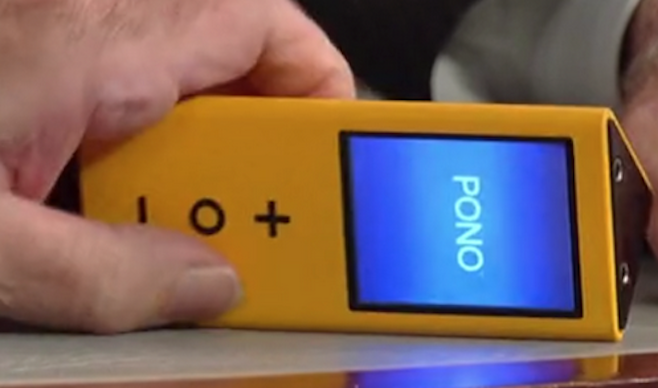
Introduced in 2001, Apple’s iPod revolutionized the way people listen to music—thanks to this and other digital music players, thousands of songs are stored as computer files on a pocket-sized device. But there’s one group who doesn’t like the easy access to music offered by the iPod: audiophiles. In order to get that much music on an iPod, the files are compressed, leading to some loss of layers and nuances in recordings. But a new high-definition, high-sound-quality music player called Pono is on the way—and it was invented by legendary rock star Neil Young. “We’ve liberated the music of the artist from the digital file and restored it to is original artistic quality, as it was in the studio,” Young wrote on Pono’s facebook page. Young announced the Pono player on The Late Show With David Letterman in 2012, and recently said that the player will be for sale in early 2014.
More convenient soup
One of the most popular new kitchen appliances in the past new years is the single-cup coffeemaker—17 million American homes and offices now have them. Keurig is the industry leader in these devices, which brew one cup of coffee—or tea, or hot chocolate—at a time. Consumers buy packages of individual “K-cups” full of ground coffee, which is placed in a chamber in the machine, where it’s then steeped in hot water, producing a hot beverage in about a minute. In September 2013, Keurig owner Green Mountain Coffee Roasters announced that it had made a deal with Campbell’s to produce K-cups…of soup. In 2014, consumers will be able to buy the two-step soup kits: a K-cup full of dried broth is placed in the machine. Hot water turns the dried broth into liquid broth, which is then poured over an included pack of noodles.
Japanese company LIXIL makes computerized gadgets for the home, office, and bathroom…including “smart toilets.” It’s latest innovation: the Inax Satis, a high-tech toilet that can you can program and control with your smartphone.
How can you control a toilet with your phone? Well, the Satis has a motorized lid, a bidet, and a deodorizer. Users can control the pressure of the bidet’s stream, or remotely close an open lid, for example, via an app called “My Satis.” The app can also be used to keep a daily log of bowel movements, if you’re into that level of documenting
your life.
In one of the most inexplicable, perplexing, and kind of gross fads of all time, the hottest thing going in the world of coffee are beans that have passed through the digestive tracts of exotic animals. Adherents claim that the premium coffee that results is better than regular coffee. Why? The animals eat only the tastiest, ripest berries from coffee plants, then digest the outer berries, allowing the beans inside pass through their stomachs unharmed, but left coated with amino acids and enzymes. The animals’ feces is collected, with the beans removed, cleaned, and roasted, then ground into a beverage that fans claim is smoother and less bitter than other coffees because of those amino acids and enzymes from an animal’s digestive tract.
The most popular berries-to-butts-to-baristas blend is kopi luwak coffee, made from beans that have passed through the digestive system of the civet, an exotic mammal native to Asia and Africa, also known as a luwak or toddy cat. In 1991 British coffee importer Tony Wild became the first European to offer coffee made from pre-digested beans. The kopi luwak became so popular in Europe that its production is being industrialized, leading to widespread mistreatment of civets. Recently, Wild launched a campaign to end the production and consumption of the special coffee.
In the Terminator films, robots sent from the future to kill humans are constructed of a core of liquid metal, allowing damaged or melted robots to easily reform themselves. A group of scientists at the Cidetec Centre for Electrochemical Technologies in Spain thought that this terrifying possibility should be a reality—they’ve developed what they call a “self-healing polymer.”
The Cidetec Centre actually named their creation the Terminator Polymer, but claim their invention wasn’t made for time-travelling, human-killing robots. Instead, the goal is to improve the lifespan and durability of common plastic-and-metal consumer goods that, while expensive, frequently break, such as video game controllers, stereo speakers, and laptop computers. The Terminator polymer is reportedly the first automatically regenerating material ever designed and it’s capable of repairing imperfections in itself up to 97% in as little as
Scientists at the Cidetec Centre say that the regeneration is caused by a “metathesis reaction of aromatic disulphides, which naturally exchange at room temperature.” Or, in layman’s terms, the polymer works sort of like a combination of Velcro and a standard household sealant. In just a few years, this polymer could start popping up in everything…so watch out.
It seems that anything you do online has the word Google attached to it today. Our online lives are filled with Gmail, Google Docs, Google Plus, Google Maps, Google Earth, Youtube, Piacasa, and most importantly, Google Search! So, how did Google get its name? Here is an piece from Uncle John’s Top Secret Bathroom Reader for Kids Only!
In 1998 Sergey Brin and Larry Page were looking for money to help start their company, so they boasted to investors that their new search engine could find a googol pieces of information, which is the word for the numeral “1” followed by 100 zeroes. One investor liked them, and immediately wrote a check made out to “Google.” The name stuck.
Snow Cone Snowstorm Mask. Invented in Montreal in 1939. Picture a transparent plastic cone—sort of like a small traffic cone—on your face (the point sticking straight out from your face), with a strap that goes around the back of your head to hold it on. This, the inventor believed, would protect your face during especially bad Quebec snowstorms.
Mechanical Skirt Lifter. Invented by a woman (name unknown), in Calgary in 1890, this device was meant to aid women who wore the big poofy skirts popular in the Victorian era. The device, which was made of metal, consisted of two clips on either end of a chain. One clip attached to the skirt’s waist, the other to the hem. When a woman had to cross a muddy road, or climb some steps, or found herself in some similar situation in which her skirt hem might become dirty or be in the way, she could pull the chain and put one of its links on a hook hear the waist, thus holding up the hem of her skirt.
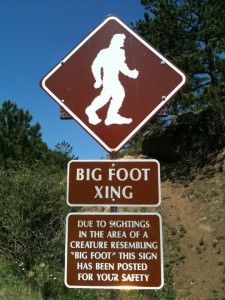
Another possible use: in the big hunt for bigfoot. Jeffrey Meldrum, an anthropology professor at Idaho State University, along with entrepreneur William Barnes, are spearheading a project that will use an innovative new type of drone to search for evidence that Bigfoot actually exists. They call their undertaking “The Falcon Project.” Barnes and Meldrum hope to find enough funding to build the Aurora Mk II, an unmanned, 45-foot-long airship equipped with thermal-imaging equipment and high-resolution cameras. It should be just the tool to scour the forests of the Pacific Northwest day and night, tracking Bigfoot, and, should it find one, take a picture. Unlike more conventional drones, their ship will be quieter and stealthier so as not to scare away their targets. The Aurora Mk II will also be able to travel at speeds of up to 45 mph. The team hopes to launch the ship next year and start sending it on nighttime runs over reputed Bigfoot hotspots around the United States. Over the years, there have been dozens of amateur films that claim to contain footage of real-deal sasquatches—but nothing has ever been confirmed. Earlier this year, however, a couple hiking in British Columbia captured a fairly convincing video of what may (or may not) be one.
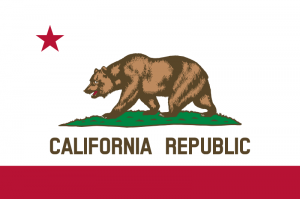
How much do you know about California’s highest, lowest, oldest, largest, and smallest stuff?
TALLEST LIVING THING: Hyperion, a 379-foot Sequoia (California redwood) tree located in the Redwood National Park near Eureka. Hyperion’s location in the park is kept secret to prevent it from being damaged by tourists.
SMALLEST MOUNTAIN RANGE: The Sutter Butte Mountain Range near Yuba City. The buttes are a circular volcanic outcropping just 10 miles in diameter.
OLDEST LIVING TREE IN NORTH AMERICA: A 4,842- year-old bristlecone pine in Inyo National Forest outside Bishop.
Named Methuselah (after the oldest person whose age is referenced in the Bible), this pine was a seedling during the Bronze Age, when the Pyramids were going up in Egypt.
LARGEST LIVING TREE: General Sherman, a giant sequoia in Sequoia National Park, east of Visalia. Named for Civil War general William Tecumseh Sherman, this tree weighs more than 2 million pounds, is 275 feet tall, and is the largest tree on earth when measured by its estimated volume of 52,513 cubic feet.
BIGGEST SOLITARY BOULDER: Giant Rock in Landers in the Mojave Desert. At about seven stories high, it weighs more than 23,000 tons.
LONGEST RUNWAY: At Edwards Air Force Base in the Mojave Desert. It’s 7.5 miles long, and the first space shuttle landed there.
WORLD’S TALLEST ONE-PIECE TOTEM POLE: Built in 1962, the brightly painted 160-foot-tall pole in the McKinleyville Shopping Center was designed by Ernest Pierson, who carved it from a single 500-year-old redwood.
OLDEST CONCRETE BRIDGE STILL IN USE: Fernbridge in Humboldt County. Built in 1911 of reinforced concrete, it crosses the Eel River and is 1,450 feet long.
HIGHEST LANDING PAD ON A BUILDING: The U.S. Bank Tower in downtown L.A. is 1,018 feet high, making it the world’s tallest building with a helipad on the roof. It’s also America’s tallest building west of Chicago.
NORTH AMERICA’S BEST VIEW OF THE WORLD: The 3,849-foot summit of Mt. Diablo in Contra Costa County. It reveals more of the earth’s surface than any other peak in the world, except Mt. Kilimanjaro in Africa. Mt. Diablo looks west to the Farallon Islands in the Pacific, east to the Sierra Nevada mountain range, south to the Santa Cruz Mountains, and north to the Cascades.
NORTH AMERICA’S HIGHEST CONCENTRATION OF LAVA TUBE CAVES: Lava Beds National Monument near Tulelake.
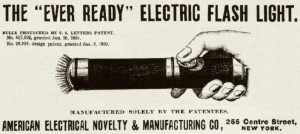
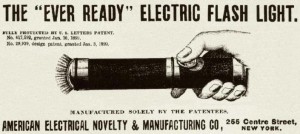
A few years after D-cell batteries were invented in 1896 came the first battery-powered hand lights. The first one— called the “Electrical Hand Torch”—was invented by American Conrad Hubert. Because early batteries were weak and the contacts faulty, the lights flashed a lot, hence the name “flashlight.”
Even after the batteries and contacts were improved, the name stuck. (In the U.K., flashlights are still referred to as “torches.”)
THE 911 EMERGENCY CALL SYSTEM
The 999 emergency phone number was set up in England after a 1937 house fire killed five people. It wasn’t until 1967 that the FCC and AT&T worked together to create the system in the United States. They chose “911” because “999” took too long to dial on a rotary phone. But AT&T was taking a long time to implement the system, so Bob Gallagher, president of the Alabama Telephone Company, ordered his plant manager, Robert Fitzgerald, to set up the nation’s first 911 service in Haleyville, Alabama. By the mid-1970s, most of the U.S. could dial 911.
Pet Rock: The item that became synonymous with the whimsical and gullible 1970s has returned! Only now, it’s high-tech. In the spirit of the original, it does nothing; plugging it into your computer’s USB port doesn’t even draw any power away.
Squirming Tentacle: People will think an octopus or the fictional alien monster Cthulhu has taken control of your laptop when they see a moving tentacle coming out of a USB port. Unlike the Pet Rock, at least it moves.
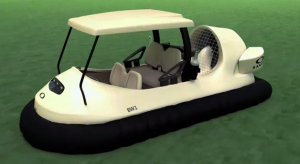
Most golfers dread hitting a water hazard, or hate to maneuver their golf carts around sand traps and other obstacles. But not the golfers at the Windy Knoll Golf Club in Springfield, Ohio. This summer, the course is unveiling two new hovercraft golf carts for their customers to use instead of the more conventional golf carts.
Windy Knoll will become the first course in America to offer BW1 Hovercraft Golf Carts. After seeing a video of PGA tour veteran (and 2012 Masters champion) Bubba Watson buzzing around in a prototype, the club’s management decided that hovercrafts were the future of golf, and that the future is now.
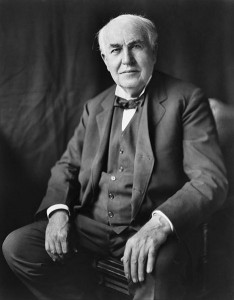
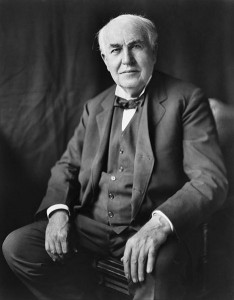
By the beginning of the 20th century, electricity was spreading to homes and businesses across America. The preferred method was AC, or “alternating current” electricity, devised by entrepreneur George Westinghouse. One guy not too happy about that: Thomas Edison, who came up with DC, or “direct current” electricity. Edison was still unwilling to accept his defeat and wanted to stage a publicity stunt to prove that his method was the superior method.
Edison went about promoting DC power, and showing that it was safe and effective, in a very bizarre way—he’d publicly electrocute animals. Through the 1890s and into the 1900s, Edison killed cats, horses, an orangutan, and once helped the state of New York execute a convicted ax murderer.
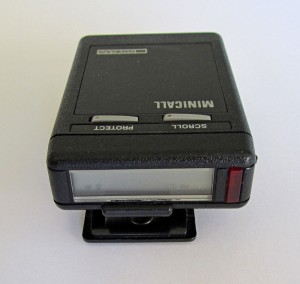
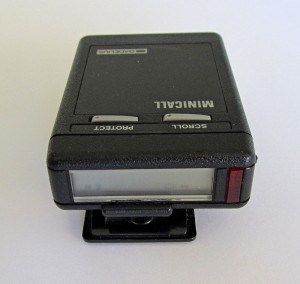
From the mid-‘90s to the early 2000s, before cell phones became ubiquitous, the best, cheapest way for parents to keep track of their teenagers, and for teenagers to keep track of each other, were beepers, or pagers. Here’s how it worked: From any phone, you’d dial a friend’s beeper number. They’d receive a simple text message on their pager’s display: your number, and any other numbers you wanted to include. For example: “911” would mean “call me right now – it’s an emergency.”
From that spawned a new language of beeper codes. Those little coded messages became both a shorthand, a way to actually communicate via the very limited capacity of a pager, and also a way to shut out uninformed, nosey parents. Here are some of those old beeper codes. (While some of them make perfect sense, others seem quite random. But who can understand these kids today…or yesterday?)




 Earlier this year, United Nations secretary-general Ban Ki-Moon, along with a coalition from Singapore, introduced a resolution to declare November 19th the first “World Toilet Day.” That sounds lighthearted or silly, but then maybe here in the U.S. we take for granted our widespread sanitation and consistent access to toilets. Worldwide, the lack of sanitation and toilets is a public health crisis. “Sanitation is central to human and environmental health,” Ban said. “It is essential for sustainable development, dignity, and opportunity.” In other words, it’s a basic human right that a lot of humans do not get to enjoy.