As a teenager in Detroit in the 1980s, Robert Ritchie deejayed and breakdanced at parties in exchange for free beer. He says he often heard someone in the mostly African-American crowd remark, “Look at that white kid rock.
BRUNO MARS
The singer’s real name is Peter Hernandez. At age two, his father, a wrestling fan, started calling him “Bruno” because he resembled pro wrestler Bruno Sammartino. In 2003, when he moved from his birthplace of Hawaii to Los Angeles to make it as a singer, he added “Mars” because “a lot of girls say I’m out of this world.”
SLASH (Guns N’ Roses)
Growing up in Los Angeles, Saul Hudson’s best friend was the son of character actor Seymour Cassel (Faces, Rushmore). The actor nicknamed Saul “Slash” because, as Slash said in his memoir, “I was always in a hurry, hustling whatever it was I was hustling, and never had time to sit and chat.
If you were thinking of visiting the ancestral homeland of Starbucks, grunge music, and Fremont Troll on September 16, you’re going to have to change your plans. That’s because that day is Stay Away From Seattle Day.
Believe it or don’t, this strange “holiday” is real, and actually celebrated by many residents in Seattle, America’s rainiest big city. Much like the citizens of its almost-as-rainy and insular rival city of Portland, Seattleites love sharing their city and economy with visitors…but they love them even more when they leave.
Snow Cone Snowstorm Mask. Invented in Montreal in 1939. Picture a transparent plastic cone—sort of like a small traffic cone—on your face (the point sticking straight out from your face), with a strap that goes around the back of your head to hold it on. This, the inventor believed, would protect your face during especially bad Quebec snowstorms.
Mechanical Skirt Lifter. Invented by a woman (name unknown), in Calgary in 1890, this device was meant to aid women who wore the big poofy skirts popular in the Victorian era. The device, which was made of metal, consisted of two clips on either end of a chain. One clip attached to the skirt’s waist, the other to the hem. When a woman had to cross a muddy road, or climb some steps, or found herself in some similar situation in which her skirt hem might become dirty or be in the way, she could pull the chain and put one of its links on a hook hear the waist, thus holding up the hem of her skirt.
Have you heard of one James McIntyre? His unusual verses set the world afire. Think of this while eating your Cheerios: In the 1800s, he was the bard of southwestern Ontario. His work is published this day still, If you read his poems, they’ll make you ill.
ABARD IS BORN
James McIntyre (1827–1906), known to his admirers as the “Chaucer of Cheese,” was born in the Scottish village of Forres. He moved to Canada when he was 14 and lived most of his life in Ingersoll, a small town in Ontario, where he worked as a furniture and coffin maker. But what earned him his reputation was his hobby—writing poetry. McIntyre wrote poems on a variety of topics: He described Ontario towns, saluted his favorite authors, and sang the praises of farming and country life. He even composed tributes to his furniture.
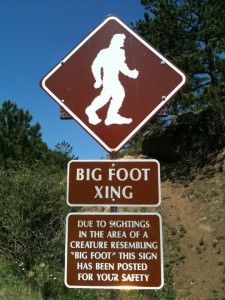
Another possible use: in the big hunt for bigfoot. Jeffrey Meldrum, an anthropology professor at Idaho State University, along with entrepreneur William Barnes, are spearheading a project that will use an innovative new type of drone to search for evidence that Bigfoot actually exists. They call their undertaking “The Falcon Project.” Barnes and Meldrum hope to find enough funding to build the Aurora Mk II, an unmanned, 45-foot-long airship equipped with thermal-imaging equipment and high-resolution cameras. It should be just the tool to scour the forests of the Pacific Northwest day and night, tracking Bigfoot, and, should it find one, take a picture. Unlike more conventional drones, their ship will be quieter and stealthier so as not to scare away their targets. The Aurora Mk II will also be able to travel at speeds of up to 45 mph. The team hopes to launch the ship next year and start sending it on nighttime runs over reputed Bigfoot hotspots around the United States. Over the years, there have been dozens of amateur films that claim to contain footage of real-deal sasquatches—but nothing has ever been confirmed. Earlier this year, however, a couple hiking in British Columbia captured a fairly convincing video of what may (or may not) be one.
Toilets were developed around the world, independently, thousands of years ago, but archaeologists keep finding older and older prototypes in Scotland. One of the oldest was found by archaeologists in the 1850s at Skara Brae, an ancient settlement on Mainland, the largest of the Orkney Islands off the coast of Scotland. Several stone huts among the ruins contained drains that extended outside their walls. Historians believe that the huts, which date back to 3,000 BC, were one of the first, if not the first, indoor bathrooms on Earth.
Meet the new team, same as the old team—just with a different name.
New York Titans
The Tennessee Titans weren’t the first Titans in pro football. the first were the New York Titans, a charter member of the American Football League (later absorbed by the NFL) in 1960. The name was a wry reference to the New York Giants of the NFL—in mythology, titans are bigger, stronger, and tougher than giants. the name only lasted for three years. By then the team was playing in brand-new Shea Stadium, located directly beneath the flight paths of two major airports, LaGuardia and JFK, hence the new Jets. (It also rhymed with the name of Shea Stadium’s other team, baseball’s New York Mets.)
How much do you know about California’s highest, lowest, oldest, largest, and smallest stuff?
TALLEST LIVING THING: Hyperion, a 379-foot Sequoia (California redwood) tree located in the Redwood National Park near Eureka. Hyperion’s location in the park is kept secret to prevent it from being damaged by tourists.
SMALLEST MOUNTAIN RANGE: The Sutter Butte Mountain Range near Yuba City. The buttes are a circular volcanic outcropping just 10 miles in diameter.
OLDEST LIVING TREE IN NORTH AMERICA: A 4,842- year-old bristlecone pine in Inyo National Forest outside Bishop.
Named Methuselah (after the oldest person whose age is referenced in the Bible), this pine was a seedling during the Bronze Age, when the Pyramids were going up in Egypt.
LARGEST LIVING TREE: General Sherman, a giant sequoia in Sequoia National Park, east of Visalia. Named for Civil War general William Tecumseh Sherman, this tree weighs more than 2 million pounds, is 275 feet tall, and is the largest tree on earth when measured by its estimated volume of 52,513 cubic feet.
BIGGEST SOLITARY BOULDER: Giant Rock in Landers in the Mojave Desert. At about seven stories high, it weighs more than 23,000 tons.
LONGEST RUNWAY: At Edwards Air Force Base in the Mojave Desert. It’s 7.5 miles long, and the first space shuttle landed there.
WORLD’S TALLEST ONE-PIECE TOTEM POLE: Built in 1962, the brightly painted 160-foot-tall pole in the McKinleyville Shopping Center was designed by Ernest Pierson, who carved it from a single 500-year-old redwood.
OLDEST CONCRETE BRIDGE STILL IN USE: Fernbridge in Humboldt County. Built in 1911 of reinforced concrete, it crosses the Eel River and is 1,450 feet long.
HIGHEST LANDING PAD ON A BUILDING: The U.S. Bank Tower in downtown L.A. is 1,018 feet high, making it the world’s tallest building with a helipad on the roof. It’s also America’s tallest building west of Chicago.
NORTH AMERICA’S BEST VIEW OF THE WORLD: The 3,849-foot summit of Mt. Diablo in Contra Costa County. It reveals more of the earth’s surface than any other peak in the world, except Mt. Kilimanjaro in Africa. Mt. Diablo looks west to the Farallon Islands in the Pacific, east to the Sierra Nevada mountain range, south to the Santa Cruz Mountains, and north to the Cascades.
NORTH AMERICA’S HIGHEST CONCENTRATION OF LAVA TUBE CAVES: Lava Beds National Monument near Tulelake.
According to a recent study, the average American worker spends around two hours a day at work on activities not-related to work—in other words, goofing off, messing around, or procrastinating. This ends up costing employers millions in lost productivity annually. (Shame on you if you’re reading this at work.) This national “epidemic” spreads beyond work. Other studies show that putting off things you have to do anyway, such as paying bills or filing taxes, can drain hundreds of dollars from your bank account.
John Lennon and Paul McCartney were very hot and cold with each other after the Beatles broke up in 1970—they’d snipe at each in the press sometimes, while other times, they were friendly. For example, the night Lorne Michaels famously made his offer to pay the Beatles $3,000 to reunite on Saturday Night Live, Lennon and McCartney were actually watching the show, together, in Lennon’s apartment in New York, and almost went down to the show. But they only ever recorded together again once. In March 1974, Lennon had temporarily split with his wife, Yoko Ono, and had moved to Los Angeles. On March 28, he was at a Burbank studio producing Harry Nilsson’s Pussy Cats. That’s when Paul and Linda McCartney dropped by, unannounced. Lennon greeted McCartney by saying, “Valiant Paul McCartney, I presume?” McCartney responded, “Sir Jasper Lennon, I presume.” It was an inside joke—the lines were an exchange from a 1962 Beatles TV special. Before long, a jam sessions was underway—Lennon on guitar and lead vocals, McCartney on drums and harmonies. (And another drop-in, Stevie Wonder, played piano.) A bootleg of the session didn’t surface until 1992 under the title A Toot and a Snore in ’74, because Lennon repeatedly keeps asking for a “toot”—cocaine. The 26-minute recording is mostly chatter, but Lennon and McCartney play a bit of “Stand By Me” and “Sleepwalk.”
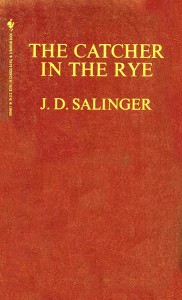
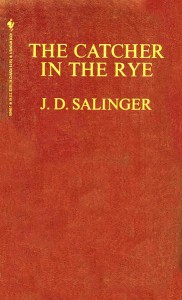
Catcher in the Rye author J.D. Salinger was as famous for being a recluse who never published much after his famous 1951 novel as he was for that seminal book. After Salinger died at age 91 in 2010, there was wide speculation that if he’d been writing during all those years holed up in his house in New Hampshire, scores of books might finally see the light of day. And now, they are. Salinger’s estate has been settled, and it includes detailed instructions regarding how he wanted five completely unseen books to be released.
Fans have wondered for years what those books might be, and Uncle John is no exception. In Fake Facts, our book of completely made-up and silly trivia that sounds true but isn’t, we included a piece about imaginary lost works of Salinger called “The Salinger Vault.” Can you guess which of the following are books from the real Salinger vault that will soon be published …and which came from the phony Salinger vault in Fake Facts?
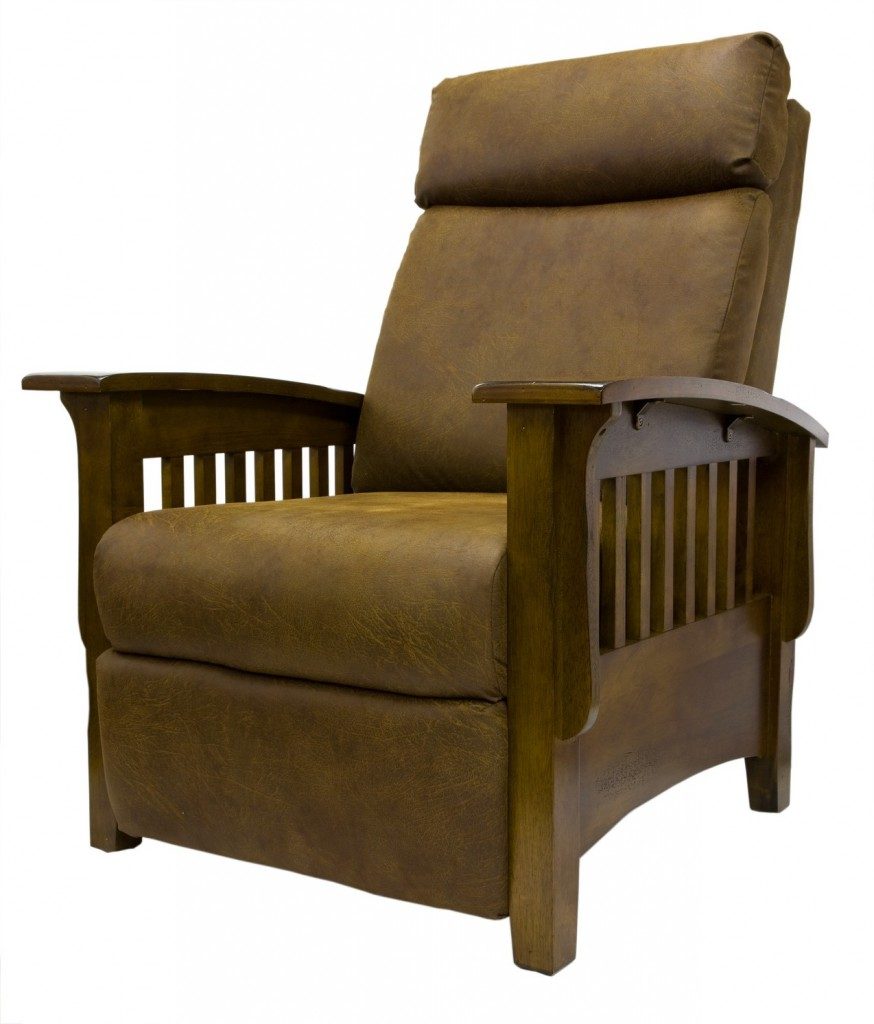
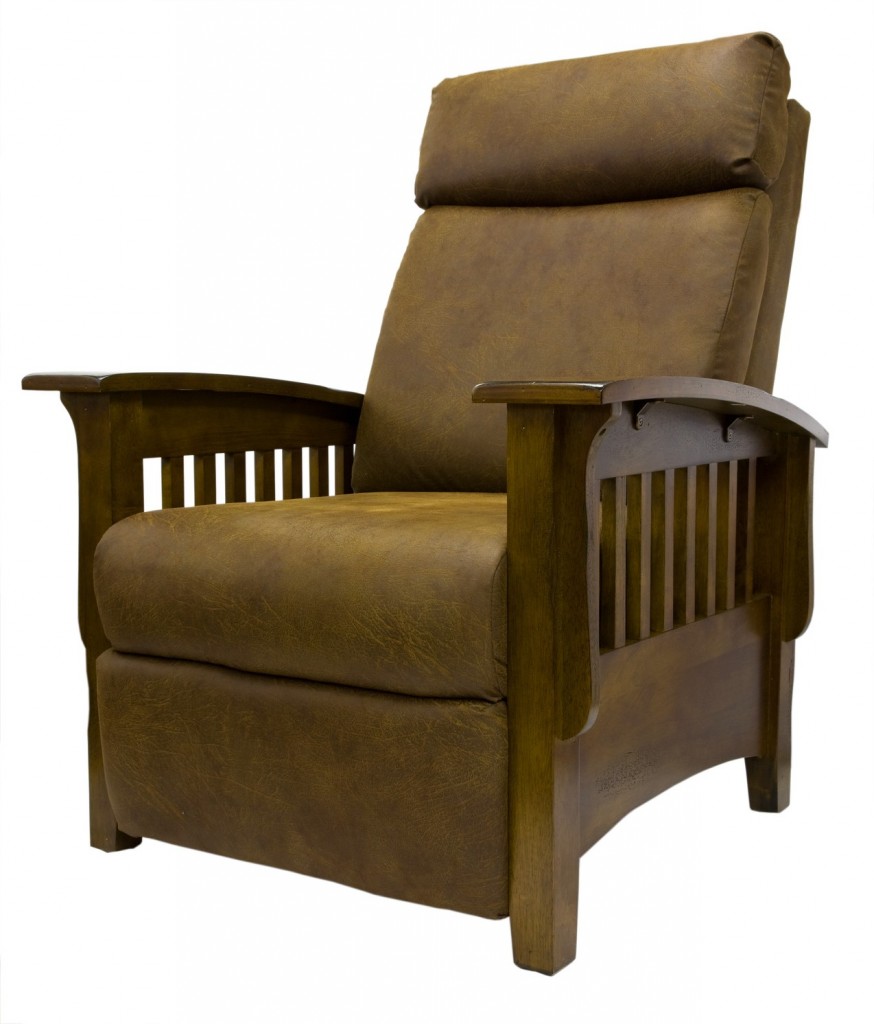
RECLINER. Reuben John Smith (d. 1899) liked to relax in life, so he asked that his eternal resting place be a leather recliner and that a checkerboard be placed in his lap. (Smith also asked to be buried with a key to his tomb in case the undertakers made a mistake.)
WHISTLE. In To Have and Have Not (1944), Lauren Bacall delivers a famous line to real-life future husband Humphrey Bogart: “You know how to whistle, don’t you, Steve? You just put your lips together…and blow.” After Bogart was cremated, Bacall put a golden whistle in the urn with his ashes.
PIPE AND TOBACCO. Sixteenth-century explorer Sir Walter Raleigh is credited with popularizing tobacco smoking in England, a habit he picked up on his travels to the New World. His last request before being executed for treason in 1618: one final smoke. Raleigh’s will provided for “ten pounds of tobacco, and two pipes” for any smoker who attended his funeral, and requested that he be buried with his favorite pipe and some tobacco, in a coffin lined with wood from his cigar boxes.
DRUM. This word comes from the Middle Dutch term tromme, which is believed to be onomotopaeic in origin. It became the English drum, as a noun, in the early 1500s.
PSALM. The old Greek verb psallein meant “to pluck a stringed instrument.” That became psalmos, which meant something along the lines of “the sound of a harp,” and then came to mean a song, especially a sacred song of the Jewish tradition, as in the psalms of King David.
DOO-WOP. This music style, begun in the 1950s and characterized by rich vocal harmonies, was named for the nonsense syllables sung behind the lead. First song that actually had the phrase “doowop” in it: “When You Dance,” a 1955 hit by the Turbans. It didn’t become an official word, however, until 1969.
The Modern Toilet
Location: Taipei, Taiwan
Details: Yes, it’s a toilet-themed restaurant. Diners sit on toilets and eat out of toilet-shaped bowls and plates. The interior of the restaurant is laid out with brightly colored bathroom tile, and the lights are shaped like urinals. The favorite menu item, says owner Eric Wang, is chocolate ice cream—probably because “it looks like the real thing.”
A few years after D-cell batteries were invented in 1896 came the first battery-powered hand lights. The first one— called the “Electrical Hand Torch”—was invented by American Conrad Hubert. Because early batteries were weak and the contacts faulty, the lights flashed a lot, hence the name “flashlight.”
Even after the batteries and contacts were improved, the name stuck. (In the U.K., flashlights are still referred to as “torches.”)
THE 911 EMERGENCY CALL SYSTEM
The 999 emergency phone number was set up in England after a 1937 house fire killed five people. It wasn’t until 1967 that the FCC and AT&T worked together to create the system in the United States. They chose “911” because “999” took too long to dial on a rotary phone. But AT&T was taking a long time to implement the system, so Bob Gallagher, president of the Alabama Telephone Company, ordered his plant manager, Robert Fitzgerald, to set up the nation’s first 911 service in Haleyville, Alabama. By the mid-1970s, most of the U.S. could dial 911.
Sometimes even a thief can feel remorse. Recently, a group of burglars in San Bernardino, California, had a change of heart. The computers they stole belonged to San Bernardino Sexual Assault Services—a nonprofit. Once the burglars realized what they had done, they felt so bad that they returned the computers and left an apology note. The note read:
“We had no idea what we were taking. Here is your stuff back. We hope that you guys can continue to make a difference in people’s lives.”
If they were really nice, they probably wouldn’t be crooks to begin with. But what else would you call a thief who apologizes?
GIMME TEN
At 5:00 a.m. on November 17, 2003, a man walked into a 7-Eleven in Santee, California, pulled out a gun, and told the clerk to give him $10. The clerk gave the man the money, and the man ran off. At 10:00 a.m. the same man returned to the store, put $10 on the counter, and apologized for the robbery. The clerk didn’t wait for the apology—he immediately pressed the “panic” button under the counter. The police arrived and arrested the thief, who explained that he had stolen the money to buy gas for his car.
Sometimes you just need a good excuse to TP your neighbor’s house…or leave a batch of chocolate chip cookies on that same neighbor’s doorstep. For either evil deed, or for good deeds, there’s Just Because Day.
Just Because Day is tomorrow, August 27, and it’s the perfect day to do whatever you please—literally anything. Such is the nature of “Just Because Day.” According to Holiday Insights, an internet depository for these unusual annual events and made-up holidays, it was dreamt up by a California man named Joseph J. Goodwin. Back in the ‘60s, Goodwin created the holiday in order to honor life, his family, and leisure time. He celebrated the first Just Because Day by giving his wife a transistor radio (“just because!” he told her). It became an annual tradition for the Goodwins and one that, presumably, spread from them via word-of-mouth.
HOTEL: The Old Jail LOCATION: Mount Gambier, Australia DESCRIPTION:The Old Jail offers the accommodations—and decidedly spooky atmosphere—of a huge, 19th-century rural prison. The hotel was once the South Australian State Prison, which operated from 1866 to 1995. Not much has changed when it was converted into a hotel. Showers are still communal and best are still cots, but the cell doors can now be opened from the inside. “Inmates” sleep four to a cell (either with strangers or family) or can pay double for a private, two-person suite.



 KID ROCK