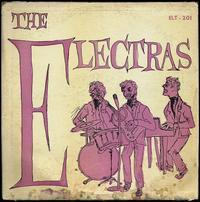
The Electras were one of thousands of garage rock bands formed by American high school kids in the early 1960s. More than 13 different guys played in the Concord, New Hampshire, band, all attending St. Paul’s School, an all-boys academy. One of the longest-serving members was bassist, future senator, current Secretary of State, and 2004 presidential candidate John Kerry.
In late 1961, the Electras recorded an album of ten songs, mostly covers of well-known rock and pop songs like “Sleepwalk” and “Summertime Blues.” Only 500 copies were ever pressed, intended for friends and family—in 2004 a copy sold for more than $2,500 on eBay. That was the only thing the Electras ever recorded…until former band member Larry Rand discovered a reel-to-reel recording of the band playing live at a dance at the all-girls Concord Academy in October 1961.
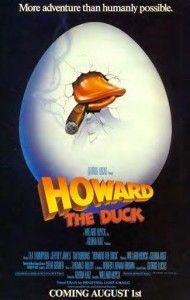
In 1983, George Lucas released Return of the Jedi, the final movie in the Star Wars trilogy, one of the most financially successful and popular film series of all time. But how would he follow it up? In 1985, Lucas announced that he was producing a movie adaptation of the Marvel Comics cult comic book Howard the Duck.
Today, Marvel movies are hot Hollywood properties—this year’s Iron Man 3 and last year’s The Avengers are among the top 20 highest-grossing films of all time. But the very first Marvel property to be made into a movie was Howard the Duck. It was about a humanoid duck from outer space living on Earth, and he was crass, rude, and sexist. Lucas had been trying to get a movie of it made since the mid-’70s, but no studio was interested. After the success of Star Wars, Lucas could make whatever he wanted and Universal readily agreed to distribute Howard the Duck. They needed a big movie for the summer of 1986, and they were still smarting from passing on the Indiana Jones movies, which Lucas had produced and which were distributed by rival Paramount.
Puerto Rico? Puerto Rico sends a representative to Congress (although they don’t get to vote, and its residents pay federal income tax and may join the U.S. Armed Forces. Puerto Ricans are classified as U.S. citizens, but cannot vote in a presidential election. Reason: The island is a U.S. territory, not a state. At least not yet. In 2012, the island held a referendum regarding statehood. A whopping 61 percent of voters said they were in favor of becoming the 51st state, and legislation was drawn up and sent to President Obama and Congress in May 2013.
There are only a few ways to get vanilla. The first and most obvious source is the vanilla bean or pod. But they’re relatively rare (growing mostly only on the island of Madagascar) and, of course, expensive—vanilla beans cost about a dollar each in stores. Another way is to synthesize it in an industrial laboratory. Vanilla flavor can be obtained from a chemical combination of sodium hydroxide and sodium sulphide, or by processing a petroleum-based chemical called guaiacol.
The ForeWord Awards program was designed to discover books from independent publishers across a number of genres. The final selections are made by librarians and booksellers based on their experiences with patrons and readers. Drawn from entries representing more than 600 publishers, the winners are selected after months of deliberation. This year there were 1,300 entries in 62 categories. Awards were determined by librarians and booksellers and announced at a special program at the American Library Association Annual Conference in Chicago on June 28, 2013.
Aunt and Uncle’s Day is finally here. This still-unofficial holiday falls on the last Friday of July—right in the middle of family vacation road trips to visit relatives—and this year, that’s today. Oddly, very little information seems to exist on who came up with Aunt and Uncle’s Day. A petition on Facebook to make it an officially recognized holiday on par with Mother’s Day or Father’s Day has only around 100 likes as of press time. But even though Hallmark doesn’t sell Aunt and Uncle’s Day cards, and no retail chain is urging you to buy the perfect gift for your fun uncle or cool aunt, you can still make a phone call…or send a card with a $10 bill tucked inside.
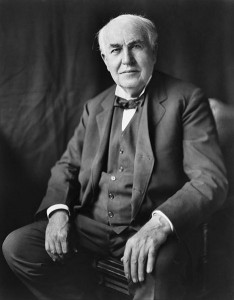
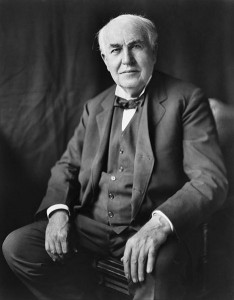
By the beginning of the 20th century, electricity was spreading to homes and businesses across America. The preferred method was AC, or “alternating current” electricity, devised by entrepreneur George Westinghouse. One guy not too happy about that: Thomas Edison, who came up with DC, or “direct current” electricity. Edison was still unwilling to accept his defeat and wanted to stage a publicity stunt to prove that his method was the superior method.
Edison went about promoting DC power, and showing that it was safe and effective, in a very bizarre way—he’d publicly electrocute animals. Through the 1890s and into the 1900s, Edison killed cats, horses, an orangutan, and once helped the state of New York execute a convicted ax murderer.
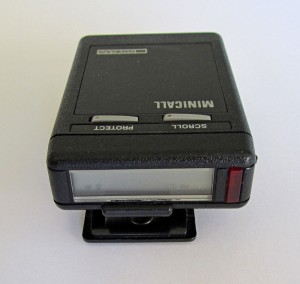
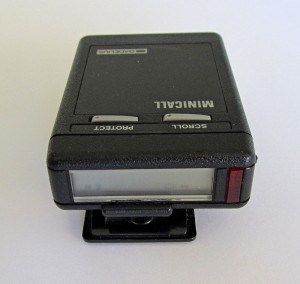
From the mid-‘90s to the early 2000s, before cell phones became ubiquitous, the best, cheapest way for parents to keep track of their teenagers, and for teenagers to keep track of each other, were beepers, or pagers. Here’s how it worked: From any phone, you’d dial a friend’s beeper number. They’d receive a simple text message on their pager’s display: your number, and any other numbers you wanted to include. For example: “911” would mean “call me right now – it’s an emergency.”
From that spawned a new language of beeper codes. Those little coded messages became both a shorthand, a way to actually communicate via the very limited capacity of a pager, and also a way to shut out uninformed, nosey parents. Here are some of those old beeper codes. (While some of them make perfect sense, others seem quite random. But who can understand these kids today…or yesterday?)
A team comprised of researchers from Duke University and the University of Missouri are hard at work on a project that could forever change toilets as we now know them. Based around a technology called “supercritical water oxygenation,” the team is building a toilet that can convert human waste into heat…and clean water.
Here’s how it works. After receiving a “deposit” of “fresh waste material,” the toilet heats a small amount of water to an extremely high temperature (over 700°F.). Organic substances dissolve, and what’s left of the waste is heat, carbon dioxide, and water. It’s not quite potable (and we’re not sure we’d drink it even if it was), but that water—which was otherwise flushed away forever—can be used for everything from showering to washing dishes.
He-Man and the Masters of the Universe was the bestselling “action figure” line of the 1980s. From 1982 to 1988, when the toys were produced in conjunction with the Masters of the Universe cartoon series, Mattel sold $1.2 billion worth of “He-Man,” “Skeletor” and dozens of other MOTU action figures. But apparently there was room for more. In 1986, the Masters of the Universe Magazine held a “Create-a-Character” contest. The magazine’s editors would chose five semi-finalists and readers would vote on the winner. The grand prize: a $100,000 scholarship, a trip to Disneyland, and, perhaps best of all, Mattel would make the winning character into an action figure.
The contest winner was 12-year-old Nathan Bitner for his character, “Fearless Photog.” Photog had a camera for a head and used his camera-head to take “photos” of his enemies, which would drain their strength and transfer their image to his chest plate. Bitner got his scholarship and his Disney vacation, but unfortunately, Mattel never followed through with the rest of the bargain. Fearless Photog was never manufactured. (Interestingly, Bitner went on to design other sci-fi characters—in the 1990s, he worked at Bungie, the video game company that developed the five-million-selling Halo.)
In 2011, the musical Spider-Man: Turn Off the Dark debuted on Broadway and made headlines. Not because it was really good, but because it was an absolute disaster. Actors in the stunt-heavy show routinely suffered injuries, critics savaged it, audience members asked for their money back, and the producers and creators sued each other. Eventually, the lawsuits were settled, safety measures were introduced, the script was rewritten mid-production, and two years later, the show is still running (to packed houses). But it’s amazing that it ever even made it to Broadway, after the failure of a proposed Batman musical.
Bouncy houses or bouncy castles are those big, brightly colored, enclosed trampolines that kids love to jump on at birthday parties, recreation centers, and Chuck E. Cheese. They’re a lot older than you think. American engineer John Scurlock got the idea in 1959. While trying to design a plastic rain cover for tennis courts, he noticed a few of his employees jumping around on one of his prototypes. That goofing off inspired him to create an inflatable floor, purely for recreational purposes. In the ‘60s, with NASA heading for the moon and space-mania at a fever pitch, Scurlock and his wife started a company called Space Walks, rented out the floors as a way to mimic walking on the moon.
Scurlock’s son Frank logically took the idea from floor to fully enclosed structure. In 1974, he joined the family business and created the Jupiter Jump. It consisted of an inflatable floor and columns that supported net walls allowing air to pass through—and the bouncers inside from falling out. Children’s birthday parties were never the same.
Flop #1. After founder Harlan Sanders sold Kentucky Fried Chicken and allowed it to be aggressively franchised in the early 1960s, the chain’s popularity grew just as fast. By 1968 it was the sixth-largest restaurant chain in America and worth hundreds of millions of dollars. Rather than saturate the market with even more KFC locations, the company opted to start a second restaurant chain: Kentucky Roast Beef & Ham. The new chain sold all the standard KFC side dishes. But instead of chicken, they served roast beef and ham. Launched in 1968, all the roast beef and ham restaurants were converted into chicken joints by 1973.
Not only is the better-than-Flubber substance flexible and transparent, it can conduct electricity. And a sheet of graphene is only one atom thick—which means it’s actually hard to detect with the human eye. When stretched out, the material is tougher than steel and harder than a diamond. Along with featherweight phones and computers, it may one day be used to create interactive newspapers, much like the ones seen in sci-fi movies, such as Minority Report.