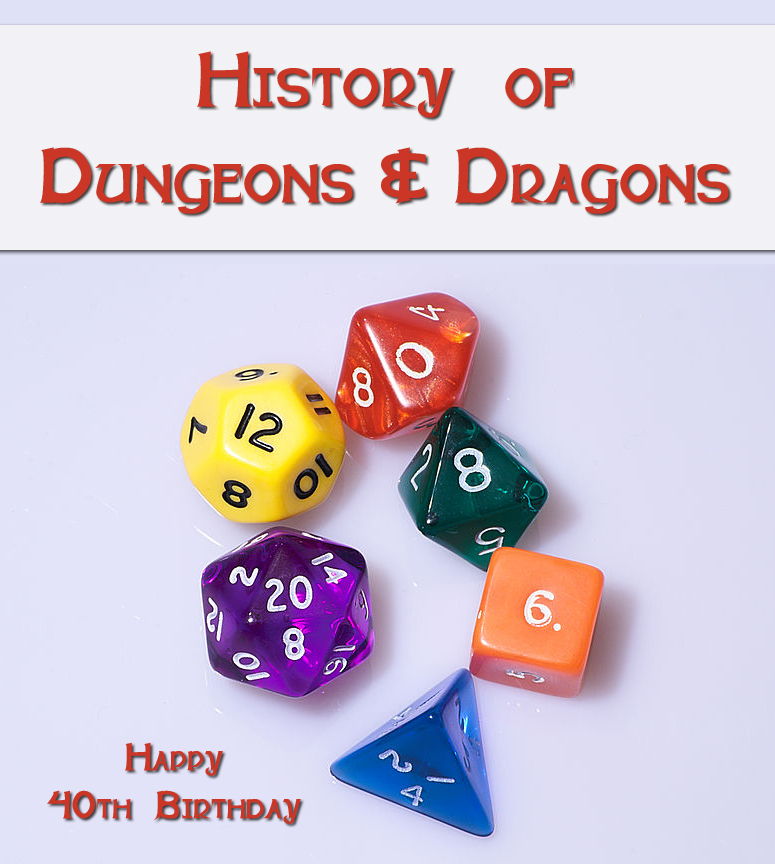
Gary Gygax (pronounced GHEE-Gax) was an insurance underwriter living in Lake Geneva, Wisconsin, in the late 1960s. He made his living calculating the probabilities that an individual seeking to buy insurance would become sick or disabled or die, and he used these estimates to set the premiums and payouts on the policies he reviewed. Every policy was like a roll of the dice: If Gygax calculated correctly, the individual received sufficient coverage at a fair price, and the insurance company had a good shot at earning a fair profit. If he was incorrect, either the individual or the insurance company would lose.
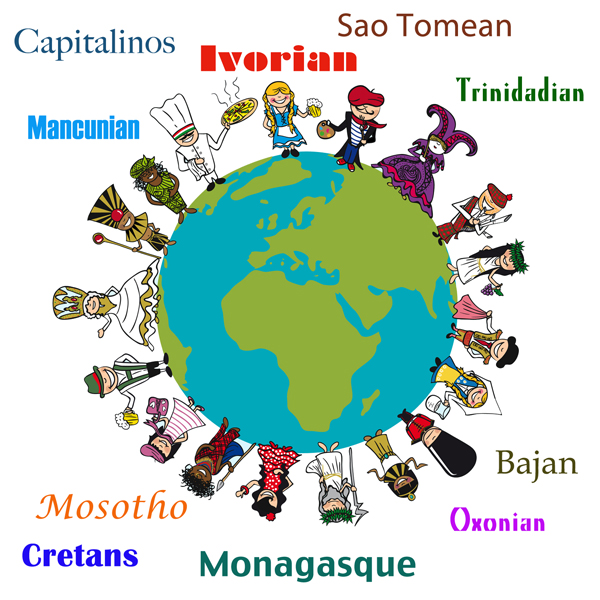
A demonym is a word used to describe the residents or natives of a place: New Yorkers, Oregonians, or Japanese, for example. Most demonyms are logical and straightforward, as in those examples. Here are some “irregular demonyms,” that, due to grammar, language, or local preference, are a little bit strange.
• In many countries, Diet Coke is sold under the name Coca-Cola Light. It’s essentially the same product, although the calorie-free sweetening agent varies. Diet Coke in the U.S. contains NutraSweet or Splenda. In other countries, cyclamates may be used, which is an artificial sweetener banned in the U.S. in 1969 due to its link to cancer in lab rats.
If you thought the lines were bad at your local Apple Store every time they roll out a new iPhone, just wait until they start selling lightsabers. Scientists recently declared that they have developed technology that could one day lead to the construction of the iconic weapon from the Stars Wars films.
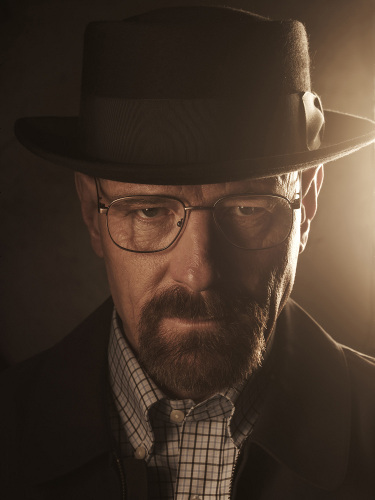
In September, Breaking Bad costar Aaron Paul (he portrayed Jesse Pinkman) held an online raffle to raise money for his wife’s anti-bullying charity The Kind Campaign. The prize: the chance to watch the highly anticipated series finale of Breaking Bad with Paul and cast member Bryan Cranston (Walter White) at the Hollywood Forever Cemetery. The lucky winner: 28-year-old Breaking Bad superfan Ryan Carroll of Fort Myers, Florida, who was informed personally by Paul. Carroll and his friend flew to Los Angeles, and were picked up at the airport by Paul in an RV just like the one used by drug kingpin Walter White on the show. End of the story? Nope. Carroll was apparently a bigger Breaking Bad enthusiast than anyone imagined. On New Year’s Eve, Fort Myers police raided three homes they believed were linked to a massive synthetic marijuana distribution ring. One of those homes belonged to Carroll—he was in possession of over $1 million worth of drugs, and is believed to be the operation’s “kingpin.”
Elvis Presley is probably the most iconic rock star of all time and certainly the most famous person ever named Elvis. On what would have been his 79th birthday, here are some other notable “Elvi.”
The Funny Elvis
Ylvis are a Norwegian comedy duo. Pronounced “ill-vis,” it’s an abbreviation of the duo’s last name, brothers Bard Yylvisaker and Vegard Ylvisaker. Ylvis hosts I kveld meld Ylvis, or Tonight with Ylvis, a popular sketch comedy show in Norway. Their best-known work is a silly music video called “The Fox (What Does the Fox Say)” which spread around the world via YouTube and has racked up more than 320 million views. The song, about how nobody seemingly knows what kind of animal sound a fox makes, hit #1 in Norway and #6 in the U.S.—the highest-charting novelty song in more than 20 years.
• Have you ever come across anyone, real or fictional, named Sherlock? It’s an obscure, Old English name that means “bright hair.”
• A common theme in all Sherlock Holmes books, movies, and other media is the great detective’s use of “deduction” to solve mysteries. Except that he doesn’t really use deduction. Sherlock uses a technique called abductive reasoning. Deduction eliminates possibilities until only one, hopefully correct theory, remains. Abductive reasoning, however, involves careful observation and consideration of evidence and any outside data to create an educated guess.
When you place a disc into the Netflix-provided return envelope, it’s addressed to a simple post office box number. So does Netflix have a gigantic P.O. box at every post office in North America? Nope—that box number written on the envelope doesn’t really exist.
Rupert Grint. Grint played Ron Weasley, Harry Potter’s best friend, in eight Harry Potter movies. One of the first things he bought when he started earning movie-star money: a 1974 Mr. Whippy van—an ice cream truck. He’d wanted to be an ice cream man, before he discovered acting. “I keep my van well stocked. It’s got a proper machine that dispenses Mr. Whippy ice cream,” he told The Daily Mail. He’d have to have a license to sell ice cream, so instead, he drives around England and hands out free ice cream bars to kids.
“bathroomreader.com” got its name from the Bathroom Readerbook series. Now you know!”
Bing. In development, Microsoft’s search engine was codenamed “Kumo,” But Microsoft went with Bing because focus groups said it reminded them of “the moment of discovery.” The company also liked that it was short, easy to spell, and transferable to languages other than English. (Detractors jokingly claim BING is an acronym for “but it’s not Google.”)
Yelp. The business listings and ratings site is in many ways an Internet version of the Yellow Pages. In fact the “yel” in “Yelp” comes from “yellow,” and the “p” comes from “pages.”
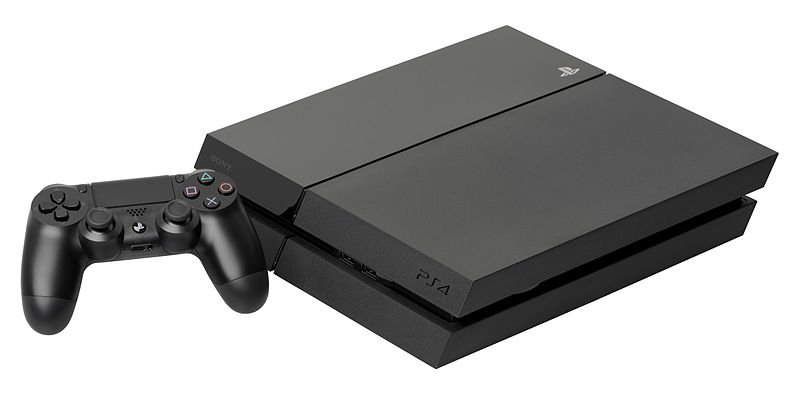
The PlayStation 4 just came out, so here’s some trivia about the first three: 5 facts about PlayStation.
• In the late ‘90s, Sony manufactured the audio processors for the Super Nintendo system. Seeing how much money Nintendo was making, the company decided to make its own system. At the same time, it was working with Phillips Electronics to improve CD-ROM technology. Sony figured out how to run data, graphics, and audio from a CD-ROM simultaneously and super-fast. Result: It could put highly advanced video games on discs, a gaming first. Disc games are also much cheaper to manufacture than cartridges, the traditional delivery method for video games.
• Video game industry analysts predicted the PlayStation to fail shortly upon its release in 2000. Why? Because at that point, only software manufacturers like Nintendo and Sega had successfully launched a video game console. Strictly electronics companies, like Sony, had a long history of releasing flop systems, such as RCA’s Studio II, Fairchild’s Channel F, and Magnavox’s Odyssey.
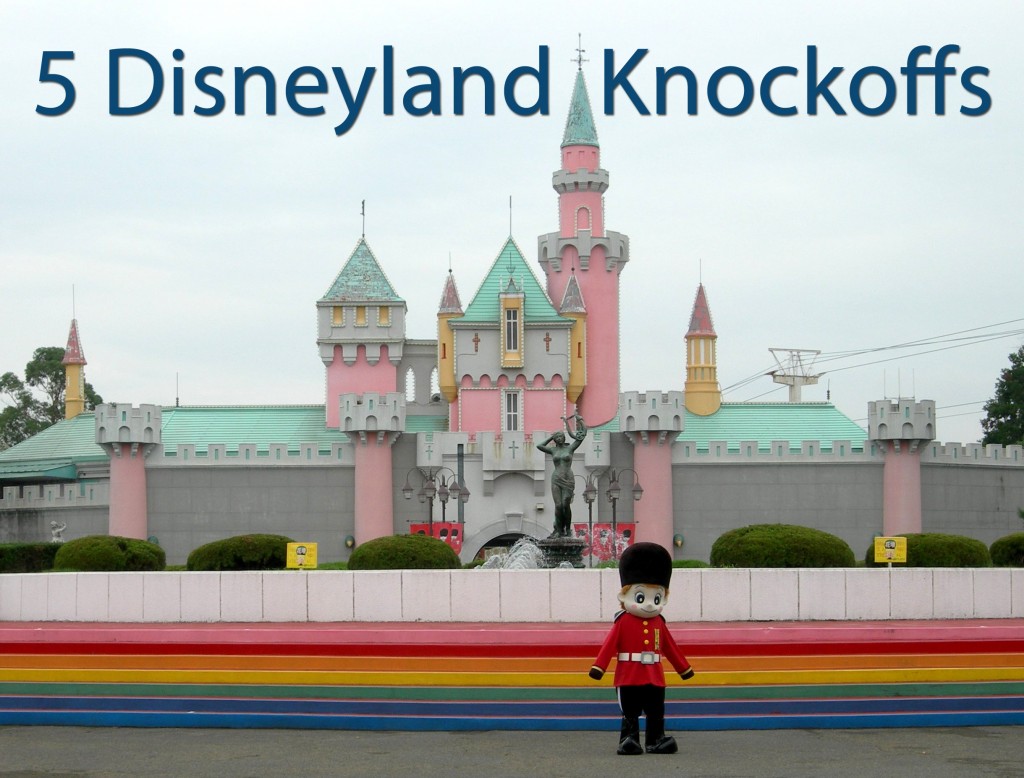
In 1959, a group of Japanese investors tried to convince executives at the Walt Disney Company to build a second Disney theme park… in Japan. Disney liked the idea, but not the location and opened a sister park for its Disneyland in California with Disney World in Florida. Undeterred, the consortium decided to move forward without Disney’s blessing and build an exact replica of Disneyland in Nara, Japan. Opening in 1961, Dreamland had all of the amenities of Disneyland, such as replicas of Sleeping Beauty’s Castle, The Jungle Cruise, Autopia, the Matterhorn, a monorail, and even a Main Street USA recreating that old timey small town Americana feel for Japanese tourists. Dreamland was the top amusement park in Japan throughout the ’60s and ’70s…until the genuine article Tokyo Disneyland opened in 1983. Dreamland closed for good in 2006.
The house, placed in a quiet neighborhood in a suburb of Las Vegas, was later given away in a contest, but the winner opted for a $75,000 cash prize instead of the house. More than 30,000 people visited the house in 1997 (including Simpsons creator Matt Groening who signed one of the walls with purple paint), but neighbors weren’t too pleased with all the tourist traffic. The house was repainted and most of the details related to the show were removed before it was sold in 2001.
Ironic refund. Beginning in 2001, the Walt Disney Company distributed a line of educational videos for babies called Baby Einstein. The 30-minute videos of puppet shows, abstract images, nature footage, and famous works of art, were scored to a classical music soundtrack and interspersed were vocabulary segments to help babies learn new words. In 2009, Disney offered refunds to parents who had purchased Baby Einstein videos after a 2007 study found that watching TV and videos as an infant may inhibit brain development. Another study showed that kids who regularly watched Baby Einstein videos actually learned fewer words by kindergarten that those who hadn’t watched the tapes.
Doctor Who premiered on England’s BBC One on November 23, 1963, and has aired almost continuously ever since (although new episodes weren’t produced between 1989 and 2005), making it by far the longest-running science-fiction program on television. With 798 episodes and counting, it’s among the longest-lasting prime-time dramas as well.
In the 1970s, it was one of the first British series to air on American TV and became a cult hit. And in England, it’s a popculture phenomenon—it’s spawned radio series, novels, and several tie-in movies. Eavesdrop for long enough in any British pub, and you’ll hear patrons arguing over who the best Doctor was. In both countries, Doctor Who has had a substantial influence on television. Here’s a primer: The premise. The Doctor (who is known only as “the Doctor”) is the last of a race called the Time Lords, who are near-omnipotent, hyperintelligent, and keep a strict non-intervention policy—a law the Doctor breaks when he sets out to explore the universe. Along with a human companion (usually a teenager or young woman), the Doctor travels through time and space.
It seems that anything you do online has the word Google attached to it today. Our online lives are filled with Gmail, Google Docs, Google Plus, Google Maps, Google Earth, Youtube, Piacasa, and most importantly, Google Search! So, how did Google get its name? Here is an piece from Uncle John’s Top Secret Bathroom Reader for Kids Only!
In 1998 Sergey Brin and Larry Page were looking for money to help start their company, so they boasted to investors that their new search engine could find a googol pieces of information, which is the word for the numeral “1” followed by 100 zeroes. One investor liked them, and immediately wrote a check made out to “Google.” The name stuck.