• The Barenaked Ladies’ hit “Brian Wilson” isn’t the most respectful song about the songwriter and major creative force behind the Beach Boys. The song references Wilson’s period in the ‘70s when agoraphobia, drug addiction, and obesity kept him housebound. The chorus of “Brian Wilson” is: “lying in bed / just like Brian Wilson did.” Still, Wilson thought “Brian Wilson” was a pretty good song. When he began recording music and touring again in the 1990s, he made the song part of his set list. A version appears on his 2000 live album Live at the Roxy Theatre.
Elvis Presley is probably the most iconic rock star of all time and certainly the most famous person ever named Elvis. On what would have been his 79th birthday, here are some other notable “Elvi.”
The Funny Elvis
Ylvis are a Norwegian comedy duo. Pronounced “ill-vis,” it’s an abbreviation of the duo’s last name, brothers Bard Yylvisaker and Vegard Ylvisaker. Ylvis hosts I kveld meld Ylvis, or Tonight with Ylvis, a popular sketch comedy show in Norway. Their best-known work is a silly music video called “The Fox (What Does the Fox Say)” which spread around the world via YouTube and has racked up more than 320 million views. The song, about how nobody seemingly knows what kind of animal sound a fox makes, hit #1 in Norway and #6 in the U.S.—the highest-charting novelty song in more than 20 years.
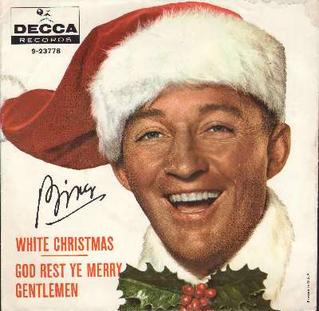
• Legendary songwriter Irving Berlin wrote the song from the point of view of a New Yorker (like himself) stuck in warm California for Christmas (as he had been). That sentiment was made explicitly clear by the song’s original first verse, which mentions “the sun is shining,” “the grass is green,” and things like palm trees and Beverly Hills.
• “White Christmas” was picked to be included in the 1942 Bing Crosby movie Holiday Inn—both Crosby and his producer thought that the song wouldn’t have much worth outside of the movie with that verse. So it was dropped.
In the 2003 Christmas-set romantic comedy Love, Actually, aging pop star Billy Mack (Bill Nighy) tries to revive his career by trying to get a Christmas #1 with a song called “Christmas is All Around,” a holiday-themed remake of the Troggs’ hit “Love is All Around.” Mack calls it a “festering turd of a record.” It’s a satirical look at the English pop cultural phenomenon of the music industry – and music buyers – guessing what song will be #1 on Christmas Day.
The ‘80s rock band Loverboy were one of the first big stars of the MTV era. In 1983, they joined up with the video channel for a contest that would allow the winner to be the video for their single “Queen of the Broken Hearts.” A viewer named Bridget Magnesi won the prize. She didn’t exactly get to star in the video—catch a glimpse of Magnesi at the 0:18 and 0:23 marks in the video. She’s the woman sitting behind the control panel.
A few weeks ago, we wrote about the Singing Nun, who had an unlikely #1 hit in the U.S. in 1963 with “Dominique,” a song sung in French. Here are some more non-English tunes that topped the American pop chart.
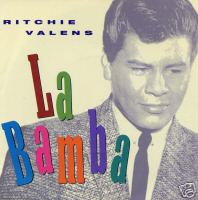
• A rock version of the folk song “La Bamba” is Ritchie Valens’ best-known and signature song, but upon its release in 1959, it was only a minor hit. As the B-side of the #2-hit ballad “Donna,” “La Bamba” hit #23. But when a movie about Ritchie Valens life and untimely death (he died in the same plane crash that killed Buddy Holly and the Big Bopper) called La Bamba was released in 1987, a cover version by the band Los Lobos hit #1. It’s the first and only time a song sung entirely in Spanish has topped the charts.
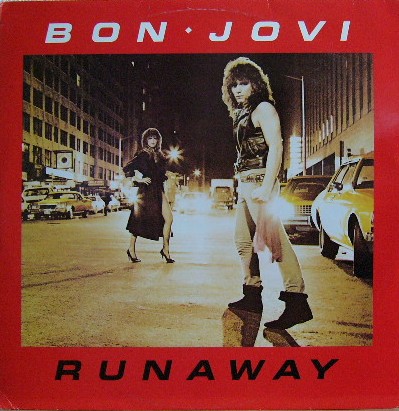
Jon Bon Jovi assembled his hard rock band, Bon Jovi, in 1983, which included bassist Hugh McDonald, who played on the group’s first single “Runaway.” The song was a local hit, and when the group got a record deal, Bon Jovi replaced some of his band members, including McDonald, with a new bass player, Alec John Such. Except…he really didn’t. Such was credited as the bass player on five multi-million-selling Bon Jovi albums, but it was really McDonald who was playing. Why was Such, who was reportedly not as accomplished a musician as McDonald, presented as Bon Jovi’s bassist? McDonald was a decade older than Jon Bon Jovi, Such, and the other members of the band. When the band became teen idols in the 1980s, youth (and youthful looks) were important, and McDonald didn’t fit that profile. In 1994, McDonald “replaced” Such, both in concert and on record.
Richard Doyle was a standup comedian from Los Angeles who hosted a show on local TV called Comic Talk, where he interviewed other comedians that were part of that city’s rising comedy scene. Doyle was also a musician—in 1973, under the name “Shamus M’Cool,” his Christmas novelty song “Santa’s Little Helper, Dingo” hit #11 on Billboard’s seasonal holiday music chart.
That was the only musical success Doyle had had, but in 1981, he decided to revive his musical career, as well as the “Shamus M’Cool” stage name. He recorded a country rock song called “American Memories,” which wasn’t a comic novelty song at all—it was a look back on triumphant, proud memories in American history. (The B-side: “American Humor,” six-minutes of Ronald Reagan jokes from Doyle’s comedy act, recorded live at the Playboy Club.)
Belgian-born, French-speaking Jeanine Deckers joined The Fichermont Convent in 1959 at the age of 26. Upon taking her vows, she adhered to the custom of picking a new name: Sister Luc-Gabrielle. Living at the convent, she passed the time by entertaining the other nuns with songs about Catholic saints that she wrote and performed on her acoustic guitar.
The superiors at the convent thought Sister Luc-Gabrielle should make a limited-press album—they could sell those records of original religious songs to people who visited the convent or who attended their religious retreats. The convent booked time for the sister at Philips Studio in Brussels in 1962. While it’s fairly common for church choirs or religious performers to self-release an album, then and now, the engineers at Philips thought Sister Luc-Gabrielle was more than just another church singer—they thought her gentle, lilting folk songs could make her a pop star. So they signed her to a contract, and presented her to the public as Soeur Sourire, or “Sister Smile.”
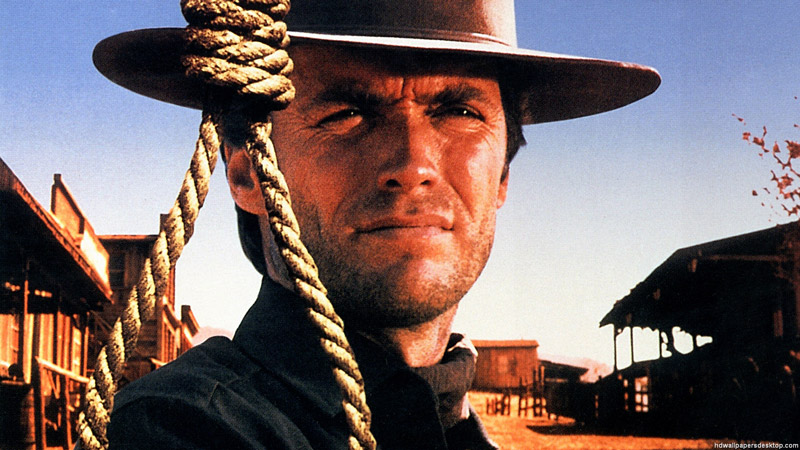
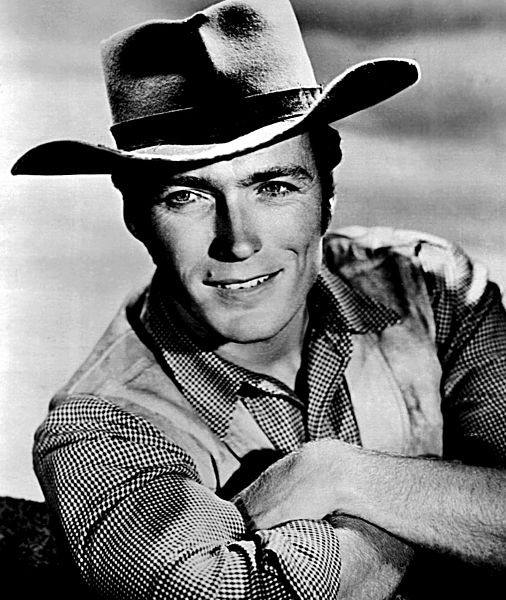
While co-starring as a tough guy on the TV western Rawhide in 1962, the tough guy actor, Clint Eastwood, recorded an album called Rawhide’s Clint Eastwood Sings Cowboy Favorites. The songs on the album weren’t pop or rock songs—they were story songs about cowboys and outlaws of the Old West, similar to what Marty Robbins might record. The album was not a hit and failed to expand Eastwood’s fanbase into the younger demographic. Eastwood gave up singing, but not music. He’s composed the score for eight of the movies he’s directed, including Mystic River and Million Dollar Baby.
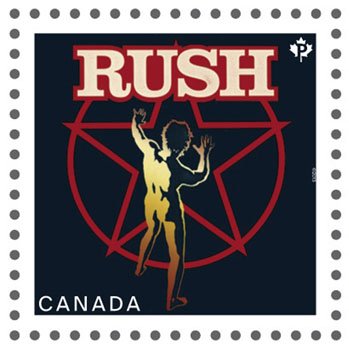
• Rush once opened for the retro group Sha Na Na. They were booed off stage.
• The inspiration for the eight-minute, epic “By-Tor and the Snow Dog” on Fly By Night was the band’s road manager’s mouthy German shepherd, who would bite anyone who came near. “He’s a By-Tor,” the manager would say.
• Neal Peart was for many years a devotee of Ayn Rand, who emphasized the individual over society and denounced the poor as parasites. He has since denounced Rand’s doctrine of selfishness and called himself a “bleeding-heart libertarian.”
• Alex Lifeson was born Aleksandar Zˇivojinovi ́c to Serbian parents—his stage name is an almost literal translation of his Serbian name.
• Unlike other bands from the ‘70s, Rush never trashed hotel rooms. However, Lifeson was tasered, arrested, and had his nose broken in 2003 at the Ritz-Carlton hotel in Naples, Florida. The incident stemmed from what the guitarist called the hotel and sheriff’s office’s “incredibly discourteous, arro- gant, and aggressive behavior.” The hotel chain later settled for damages.
Do Germans love David Hasselhoff? Uncle John investigates.
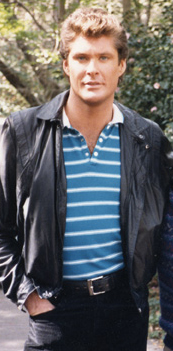
David Hasselhoff is a TV actor, best known for starring in two huge hit shows in the 1980s, Knight Rider and Baywatch. But while he was lighting up American TV screens, Hasselhoff had a second career—as a pop singer…in Europe. Most Americans probably first found out about Hasselhoff’s musical career during the dismantling of the Berlin Wall in Germany in 1989. Hasselhoff was present in Berlin for some reason, performing a song appropriate for the event called “Looking For Freedom.”
The reason, which quickly became clear: David Hasselhoff was hugely popular in Germany. (It was sort of like how American comedian and director Jerry Lewis isn’t highly respected at home but it is beloved in France.)
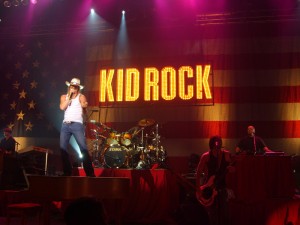
As a teenager in Detroit in the 1980s, Robert Ritchie deejayed and breakdanced at parties in exchange for free beer. He says he often heard someone in the mostly African-American crowd remark, “Look at that white kid rock.
BRUNO MARS
The singer’s real name is Peter Hernandez. At age two, his father, a wrestling fan, started calling him “Bruno” because he resembled pro wrestler Bruno Sammartino. In 2003, when he moved from his birthplace of Hawaii to Los Angeles to make it as a singer, he added “Mars” because “a lot of girls say I’m out of this world.”
SLASH (Guns N’ Roses)
Growing up in Los Angeles, Saul Hudson’s best friend was the son of character actor Seymour Cassel (Faces, Rushmore). The actor nicknamed Saul “Slash” because, as Slash said in his memoir, “I was always in a hurry, hustling whatever it was I was hustling, and never had time to sit and chat.
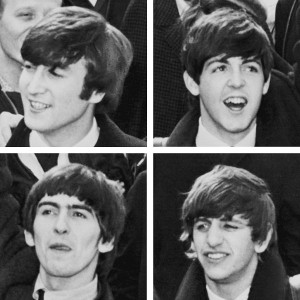
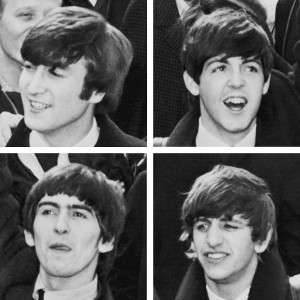
John Lennon and Paul McCartney were very hot and cold with each other after the Beatles broke up in 1970—they’d snipe at each in the press sometimes, while other times, they were friendly. For example, the night Lorne Michaels famously made his offer to pay the Beatles $3,000 to reunite on Saturday Night Live, Lennon and McCartney were actually watching the show, together, in Lennon’s apartment in New York, and almost went down to the show. But they only ever recorded together again once. In March 1974, Lennon had temporarily split with his wife, Yoko Ono, and had moved to Los Angeles. On March 28, he was at a Burbank studio producing Harry Nilsson’s Pussy Cats. That’s when Paul and Linda McCartney dropped by, unannounced. Lennon greeted McCartney by saying, “Valiant Paul McCartney, I presume?” McCartney responded, “Sir Jasper Lennon, I presume.” It was an inside joke—the lines were an exchange from a 1962 Beatles TV special. Before long, a jam sessions was underway—Lennon on guitar and lead vocals, McCartney on drums and harmonies. (And another drop-in, Stevie Wonder, played piano.) A bootleg of the session didn’t surface until 1992 under the title A Toot and a Snore in ’74, because Lennon repeatedly keeps asking for a “toot”—cocaine. The 26-minute recording is mostly chatter, but Lennon and McCartney play a bit of “Stand By Me” and “Sleepwalk.”
DRUM. This word comes from the Middle Dutch term tromme, which is believed to be onomotopaeic in origin. It became the English drum, as a noun, in the early 1500s.
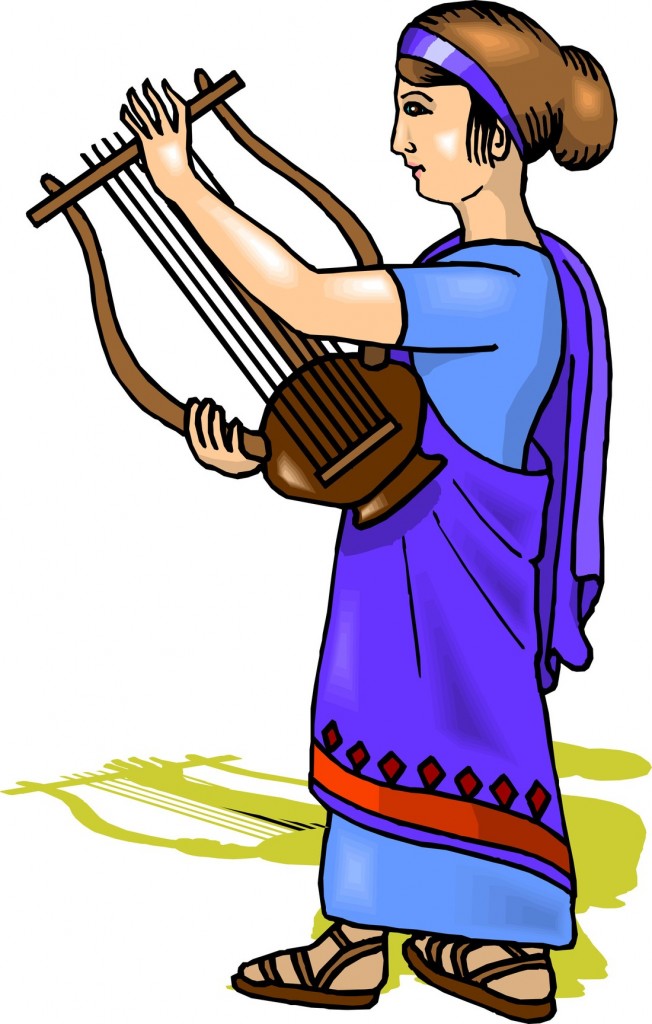
PSALM. The old Greek verb psallein meant “to pluck a stringed instrument.” That became psalmos, which meant something along the lines of “the sound of a harp,” and then came to mean a song, especially a sacred song of the Jewish tradition, as in the psalms of King David.
DOO-WOP. This music style, begun in the 1950s and characterized by rich vocal harmonies, was named for the nonsense syllables sung behind the lead. First song that actually had the phrase “doowop” in it: “When You Dance,” a 1955 hit by the Turbans. It didn’t become an official word, however, until 1969.
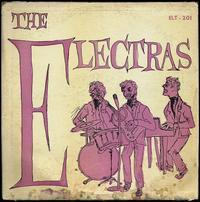
The Electras were one of thousands of garage rock bands formed by American high school kids in the early 1960s. More than 13 different guys played in the Concord, New Hampshire, band, all attending St. Paul’s School, an all-boys academy. One of the longest-serving members was bassist, future senator, current Secretary of State, and 2004 presidential candidate John Kerry.
In late 1961, the Electras recorded an album of ten songs, mostly covers of well-known rock and pop songs like “Sleepwalk” and “Summertime Blues.” Only 500 copies were ever pressed, intended for friends and family—in 2004 a copy sold for more than $2,500 on eBay. That was the only thing the Electras ever recorded…until former band member Larry Rand discovered a reel-to-reel recording of the band playing live at a dance at the all-girls Concord Academy in October 1961.



 • The Barenaked Ladies’ hit “Brian Wilson” isn’t the most respectful song about the songwriter and major creative force behind the Beach Boys. The song references Wilson’s period in the ‘70s when agoraphobia, drug addiction, and obesity kept him housebound. The chorus of “Brian Wilson” is: “lying in bed / just like Brian Wilson did.” Still, Wilson thought “Brian Wilson” was a pretty good song. When he began recording music and touring again in the 1990s, he made the song part of his set list. A version appears on his 2000 live album Live at the Roxy Theatre.