
A Brand New State? The 51st State

There are fifty nifty United States…but who might be the 51st state? We don’t know, of course, but here are some real possibilities.

51st statePuerto Rico? Puerto Rico sends a representative to Congress (although they don’t get to vote, and its residents pay federal income tax and may join the U.S. Armed Forces. Puerto Ricans are classified as U.S. citizens, but cannot vote in a presidential election. Reason: The island is a U.S. territory, not a state. At least not yet. In 2012, the island held a referendum regarding statehood. A whopping 61 percent of voters said they were in favor of becoming the 51st state, and legislation was drawn up and sent to President Obama and Congress in May 2013.

Legal Thriller: Michael Jackson vs. Paul McCartney vs. Sesame Street Parodies

The story of how Michael Jackson ruined a friendship but saved Sesame Street in the process.

One of the reasons why Sesame Street has remained on the air for more than 40 years is because it appeals both to young children and the parents who watch it with them. And because producers know parents are watching, the show features guest appearances from stars that kids wouldn’t know but adults would, like Tina Fey or Jon Hamm, and educational songs that are parodies of well-known pop songs. In the ‘70s, for example, “Bruce Stringbean and the S. Street Band” performed “Born to Add,” a parody of Bruce Springsteen’s “Born to Run.”

Food Facts: A Non-Vanilla Source of Vanilla

In the very near future, we might get vanilla from a source that sounds pretty gross, but is also incredibly environmentally friendly.

Do you love the way old books smell—musty and slightly smoky, but just a little bit spicy and sweet? (It’s what the BRI Headquarters smells like…really!) There’s actually a technical explanation for old book smell. It’s comes from a chemical called lignin, which is found in wood pulp. Wood pulp is used to make paper, and in that process, lignin gets exposed to air, or oxidizes. The oxygen in the air starts a chemical reaction in the lignin, and creates another chemical, called vanillin, which is one of the main compounds in vanilla. Old books smell slightly like vanilla, which scientists say is one of the most pleasing scents to the human nose.

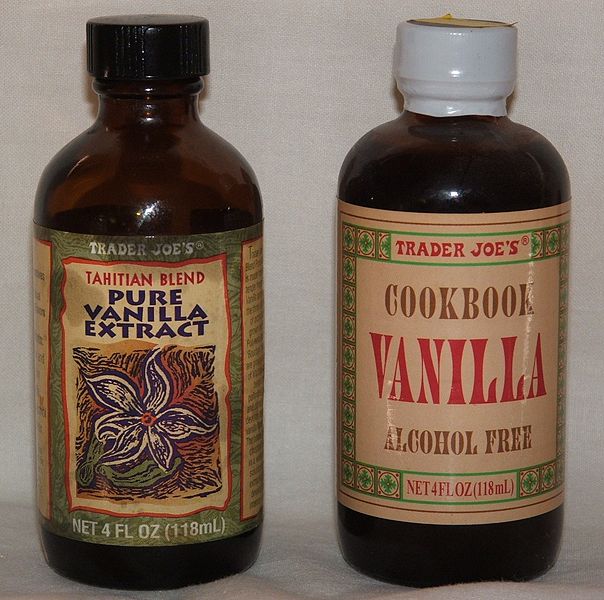
There are only a few ways to get vanilla. The first and most obvious source is the vanilla bean or pod. But they’re relatively rare (growing mostly only on the island of Madagascar) and, of course, expensive—vanilla beans cost about a dollar each in stores. Another way is to synthesize it in an industrial laboratory. Vanilla flavor can be obtained from a chemical combination of sodium hydroxide and sodium sulphide, or by processing a petroleum-based chemical called guaiacol.

Uncle John's KID-TOPIA Bathroom Reader for Kids Only!

Uncle John’s Bathroom Reader Wins ForeWord Awards

We are please to announced that we were honored at the ForeWord Reviews 2012 Book of the Year Awards.

Uncle John's KID-TOPIA Bathroom Reader for Kids Only!Uncle John’s KID-TOPIA Bathroom Reader For Kids Only! won Bronze in the Juvenile Nonfiction category.

Uncle John’s Fully Loaded 25th Anniversary Bathroom Reader got an Honorable Mention in the Humor category.

Uncle John’s The Enchanted Toilet Bathroom Reader for Kids Only! was a finalist in the Juvenile Nonfiction category.

The ForeWord Awards program was designed to discover books from independent publishers across a number of genres. The final selections are made by librarians and booksellers based on their experiences with patrons and readers. Drawn from entries representing more than 600 publishers, the winners are selected after months of deliberation. This year there were 1,300 entries in 62 categories. Awards were determined by librarians and booksellers and announced at a special program at the American Library Association Annual Conference in Chicago on June 28, 2013.

Congrats to the whole team and to all our fans!

Almost Famous

What if you were a talented musician, so good that you got a record. Now, what if you had a relative that was also good…but maybe a little bit better, and they got incredibly famous? Here are a the stories of the almost famous.

STEVE YOUNG

Starfighters were a British heavy metal band that formed in the late ‘70s. Despite having released one single called “I’m Falling” that didn’t sell very well, they were signed by the manager of the popular British heavy metal group Krokus and got a spot as the opening act on tour for AC/DC in 1981, one of the world’s most popular bands at the time. How did they pull that off? The Starfighters’ lead guitarist, Steve Young, is the nephew of Angus and Malcolm Young of AC/DC. Starfighters released two albums in the ’80s, and when Uncle Malcolm briefly left AC/DC in 1988 to check into alcohol rehab, Steve Young filled his spot. What did Starfighters sound like? If songs like “Alley Cat Blues” are any indication…a lot like AC/DC.

An Odd Holiday: Aunt and Uncle’s Day

Finally, a holiday just for Uncle John. And Mrs. Uncle John! Happy Aunt and Uncle’s Day!

You’re familiar with Mother’s Day and Father’s Day, and hardworking moms and dads certainly do deserve their holidays. There’s a National Grandparents Day (it’s in September, and not widely celebrated). And in 2001, President Bush declared June 4 “National Children’s Day.” (Although Uncle John’s mom always said “everyday is children’s day”…with a groan.)

But what about the people who don’t have kids of their own but positively worship their brothers’ and sisters’ kids? Where is the day of recognition for the loyal souls who send birthday cards with a $10 bill tucked inside and who “like” all of the niece and nephew baby pics on Facebook?

Aunt and Uncle’s DayAunt and Uncle’s Day is finally here. This still-unofficial holiday falls on the last Friday of July—right in the middle of family vacation road trips to visit relatives—and this year, that’s today. Oddly, very little information seems to exist on who came up with Aunt and Uncle’s Day. A petition on Facebook to make it an officially recognized holiday on par with Mother’s Day or Father’s Day has only around 100 likes as of press time. But even though Hallmark doesn’t sell Aunt and Uncle’s Day cards, and no retail chain is urging you to buy the perfect gift for your fun uncle or cool aunt, you can still make a phone call…or send a card with a $10 bill tucked inside.

Thomas Edison vs. The Elephant

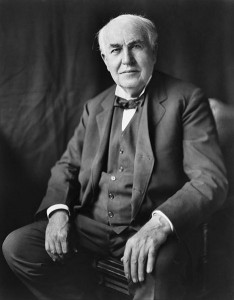
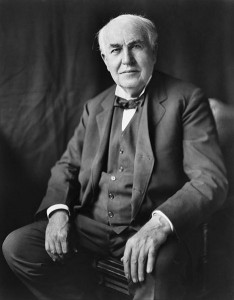
In 1903, Thomas Edison used 6,600 volts of electricity to kill an elephant. Why? Because he was kind of a jerk. But more than that, he was concerned about losing the “War of Currents” to his rival, George Westinghouse.

Thomas Edison ElephantBy the beginning of the 20th century, electricity was spreading to homes and businesses across America. The preferred method was AC, or “alternating current” electricity, devised by entrepreneur George Westinghouse. One guy not too happy about that: Thomas Edison, who came up with DC, or “direct current” electricity. Edison was still unwilling to accept his defeat and wanted to stage a publicity stunt to prove that his method was the superior method.

Edison went about promoting DC power, and showing that it was safe and effective, in a very bizarre way—he’d publicly electrocute animals. Through the 1890s and into the 1900s, Edison killed cats, horses, an orangutan, and once helped the state of New York execute a convicted ax murderer.

Beep Me! (Beeper Codes)

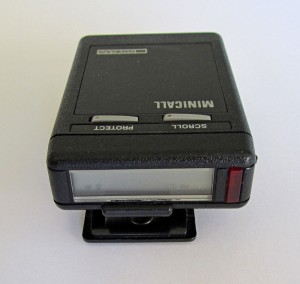
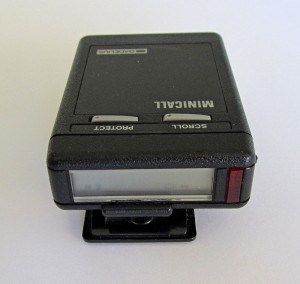
Before email, cell phones, and text messaging, people had to instantly communicate with beepers. And a secret language of beeper codes.

Beeper codesFrom the mid-‘90s to the early 2000s, before cell phones became ubiquitous, the best, cheapest way for parents to keep track of their teenagers, and for teenagers to keep track of each other, were beepers, or pagers. Here’s how it worked: From any phone, you’d dial a friend’s beeper number. They’d receive a simple text message on their pager’s display: your number, and any other numbers you wanted to include. For example: “911” would mean “call me right now – it’s an emergency.”

From that spawned a new language of beeper codes. Those little coded messages became both a shorthand, a way to actually communicate via the very limited capacity of a pager, and also a way to shut out uninformed, nosey parents. Here are some of those old beeper codes. (While some of them make perfect sense, others seem quite random. But who can understand these kids today…or yesterday?)

Weird Invention: Hot Toilet!

As we can all agree, the toilet is mankind’s greatest achievement. But even perfection can be improved upon. Maybe it is time to reinvent the toilet.

reinvent the toiletA team comprised of researchers from Duke University and the University of Missouri are hard at work on a project that could forever change toilets as we now know them. Based around a technology called “supercritical water oxygenation,” the team is building a toilet that can convert human waste into heat…and clean water.

Here’s how it works. After receiving a “deposit” of “fresh waste material,” the toilet heats a small amount of water to an extremely high temperature (over 700°F.). Organic substances dissolve, and what’s left of the waste is heat, carbon dioxide, and water. It’s not quite potable (and we’re not sure we’d drink it even if it was), but that water—which was otherwise flushed away forever—can be used for everything from showering to washing dishes.

Toy Fads: The Saga of the Lost He-Man Action Figure

It’s the rarest action figure of all time…because it didn’t exist.

he-manHe-Man and the Masters of the Universe was the bestselling “action figure” line of the 1980s. From 1982 to 1988, when the toys were produced in conjunction with the Masters of the Universe cartoon series, Mattel sold $1.2 billion worth of “He-Man,” “Skeletor” and dozens of other MOTU action figures. But apparently there was room for more. In 1986, the Masters of the Universe Magazine held a “Create-a-Character” contest. The magazine’s editors would chose five semi-finalists and readers would vote on the winner. The grand prize: a $100,000 scholarship, a trip to Disneyland, and, perhaps best of all, Mattel would make the winning character into an action figure.

The contest winner was 12-year-old Nathan Bitner for his character, “Fearless Photog.” Photog had a camera for a head and used his camera-head to take “photos” of his enemies, which would drain their strength and transfer their image to his chest plate. Bitner got his scholarship and his Disney vacation, but unfortunately, Mattel never followed through with the rest of the bargain. Fearless Photog was never manufactured. (Interestingly, Bitner went on to design other sci-fi characters—in the 1990s, he worked at Bungie, the video game company that developed the five-million-selling Halo.)

Sing, Batman, Sing! (Batman Musical)

Amazingly, Spider-Man wasn’t the first comic book superhero to try to
make it on the Great White Way.

Batman MusicalIn 2011, the musical Spider-Man: Turn Off the Dark debuted on Broadway and made headlines. Not because it was really good, but because it was an absolute disaster. Actors in the stunt-heavy show routinely suffered injuries, critics savaged it, audience members asked for their money back, and the producers and creators sued each other. Eventually, the lawsuits were settled, safety measures were introduced, the script was rewritten mid-production, and two years later, the show is still running (to packed houses). But it’s amazing that it ever even made it to Broadway, after the failure of a proposed Batman musical.

A Random Origin: The Bouncy House

bouncy houseBouncy houses or bouncy castles are those big, brightly colored, enclosed trampolines that kids love to jump on at birthday parties, recreation centers, and Chuck E. Cheese. They’re a lot older than you think. American engineer John Scurlock got the idea in 1959. While trying to design a plastic rain cover for tennis courts, he noticed a few of his employees jumping around on one of his prototypes. That goofing off inspired him to create an inflatable floor, purely for recreational purposes. In the ‘60s, with NASA heading for the moon and space-mania at a fever pitch, Scurlock and his wife started a company called Space Walks, rented out the floors as a way to mimic walking on the moon.

Scurlock’s son Frank logically took the idea from floor to fully enclosed structure. In 1974, he joined the family business and created the Jupiter Jump. It consisted of an inflatable floor and columns that supported net walls allowing air to pass through—and the bouncers inside from falling out. Children’s birthday parties were never the same.


Fast Food Flops

Spinoffs are common in entertainment: Puss in Boots was a spinoff of a character from the Shrek movies, and All in the Family spun off a number of other hit TV sitcoms, including Maude and Good Times. Spinoffs are a lot less common in the fast food restaurant business. But in the late 1960s, two successful fast food chains tried to expand with new restaurants serving completely different food. The result: fast food flops.

Flop #1. After founder Harlan Sanders sold Kentucky Fried Chicken and allowed it to be aggressively franchised in the early 1960s, the chain’s popularity grew just as fast. By 1968 it was the sixth-largest restaurant chain in America and worth hundreds of millions of dollars. Rather than saturate the market with even more KFC locations, the company opted to start a second restaurant chain: Kentucky Roast Beef & Ham. The new chain sold all the standard KFC side dishes. But instead of chicken, they served roast beef and ham. Launched in 1968, all the roast beef and ham restaurants were converted into chicken joints by 1973.

A Weird Invention: Graphene

Imagine a smartphone as thin as a sheet of paper. Or after folding up your laptop…you roll it up and put it in your pocket. Amazingly, these kinds of products may be available within the next decade, thanks to some scientists in Europe hard at work developing an amazing new material called graphene.

Not only is the better-than-Flubber substance flexible and transparent, it can conduct electricity. And a sheet of graphene is only one atom thick—which means it’s actually hard to detect with the human eye. When stretched out, the material is tougher than steel and harder than a diamond. Along with featherweight phones and computers, it may one day be used to create interactive newspapers, much like the ones seen in sci-fi movies, such as Minority Report.

Famous For Fifteen Minutes: Grand Canyon Stunts

There’s something about America’s biggest hole in the ground that seems to lure thrill-seekers into believing that they simply must risk their lives and navigate it somehow. In June, seventh-generation tightrope walker Nik Wallenda successfully walked over the Grand Canyon on a two-inch-wide cable, without a safety harness or net while the Colorado River roared thousands of feet below him. (And all on live TV.)

grand canyon stunts

Here are two more possibly less-than-sane individuals and their death-defying Grand Canyon stunts.

The Last Telegram

Here at the BRI we love to write about technology that was once cutting-edge,
and has now become obsolete and vanished from the scene. But we
seldom get an opportunity to witness the actual departure.

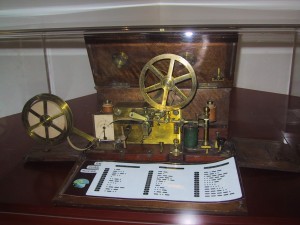
Last TelegramIn less than a week, the last telegram will be sent. The telegraph was the world’s first mass communication tool. First developed in the 1840s, sending series of electric pulses in Morse code (different combinations of pulses that corresponded to letters of the alphabet) along long stretches of electrical wire made instant communication a reality. The first telegram, sent on May 24, 1844, read, “WHAT HATH GOD WROUGHT?”

What’s On Tap? 5000-Year-Old Beer Recipe

Beer has been around for centuries—lots of world cultures have developed some variation on fermented grain and water. But the brews our distant forefathers drank were probably a lot different than the ones we drink now.

5000-year-old beer recipeWhile the ale that was enjoyed centuries before the birth of Julius Caesar may have been tastier than other beverage choices of the day, it was still incredibly sour, with a flavor closer to vinegar than Hefeweizen. That’s according to a team of University of Chicago archaeologists and brewers from the Great Lakes Brewing Company. Using a 5,000-year-old beer recipe outlined in “Hymn to Ninkasi,” an ode to the Sumerian goddess of beer, they brewed up a batch of era-appropriate beer. To help ensure authenticity, they even used recreations of ancient wooden tools and ceramic fermentation pots based on artifacts found in Iraq in the 1930s, malted the barley on a roof, and hired a baker in Cleveland to prepare the bappir (“beer bread”) they used as the source of their yeast. And they heated the beer during the brewing process the old fashioned way: over a manure-fueled fire.