
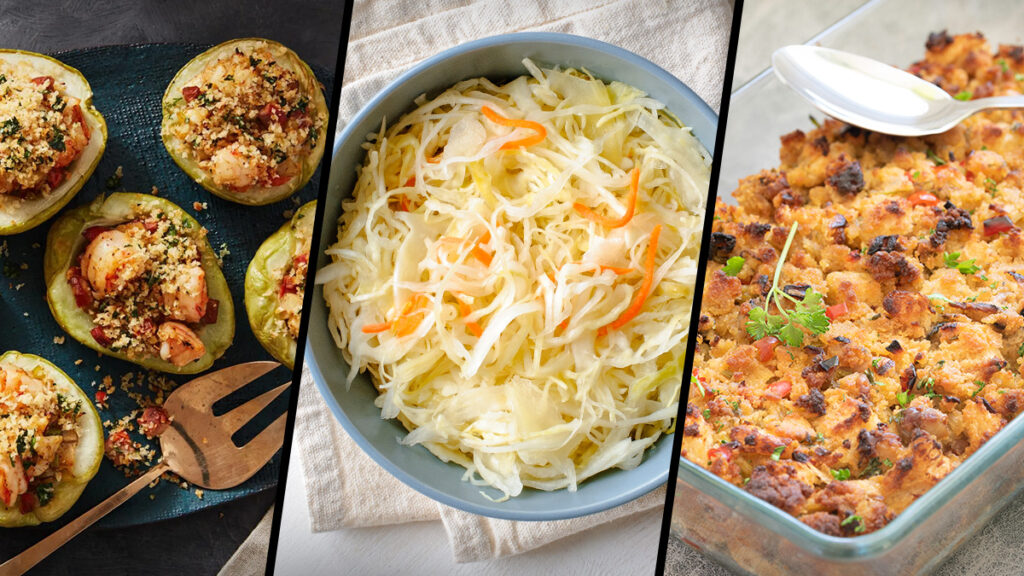
We’ve all been led to understand that everyone across America eats the same stuff on Thanksgiving — turkey, stuffing, pumpkin pie, and such. It’s simply not true. There are regional must-have sides across the land which are little-known outside their areas of culinary dominance.
Wild rice hotdish (Minnesota)
Hotdish is an umbrella term in Minnesota for one-pot dinners that include a starch, probably a canned soup, various vegetables, and probably cheese. It’s similar to a casserole, and one Minnesotan hotdish tradition at the Thanksgiving table is made with wild rice. Technically a grass that’s harvested in the late summer, that’s the starch that forms the base layer of the hotdish, topped and mixed with pork sausage or ground beef, onions, celery, mushrooms and canned cream of chicken soup and chicken broth.
Sauerkraut (Baltimore)
Pleasantly sour and bursting with flavor, sauerkraut is essentially preserved and fermented cabbage, and it’s a popular condiment on things like Reuben sandwiches and hot dogs. In and around Baltimore, it’s likely to be served as a vegetable side dish in Thanksgiving feasts. Big numbers of German emigrants settled in the city in the late 1800s, around the same time that Thanksgiving became a holiday. They brought the German preparation of sauerkraut literally to the table, and it got on with non-Germans in Baltimore before long.
Oyster stuffing (New England)
Some kind of stuffing, or dressing, is a Thanksgiving staple, be it homemade out of bread crumbs, built from cornbread or out of a box, or, as is done in New England, heavy on the oysters. Oyster stuffing has been a distinctly northeastern treat since a popular recipe was first published in the 1600s as a way to use up the plentiful shellfish that populated the area’s coastal waters. Today, oyster stuffing is usually made from croutons, celery, and herbs, with as many oysters as one likes thrown it, and often, chestnuts and mushrooms, too.
Shrimp mirlitons (Louisiana)
Various regionally-grown squashes factor into Thanksgiving dinners across the country because so many varieties are harvested and ready to eat in November. In Louisiana, the squash of the moment is the mirliton, also known as the vegetable pear or chayote. For a Louisiana Thanksgiving dinner, mirlitons are cooked until they’re soft then cooled, mashed, minced, and mixed up with standard Cajun and Creole ingredients like onions, green peppers, butter, and shrimp. Shrimp mirlitons are served like a casserole or presented to diners inside of the spent mirliton skins.
Frog eye salad (Rocky Mountains)
Frog eye salad isn’t made with frog eyes or any animal material. It’s a sweet concoction, not unlike ambrosia or other fruit salads in that it’s made from canned fruit cocktail ensconced in Cool Whip or whipped cream. As sweet as a dessert but served as a side at Thanksgiving dinners throughout Utah, Nevada, and Colorado, the dish gets its name from the addition of itty-bitty acini di pepe, a small pasta that when cooked and cooled look a lot like frog eyes.
Grape pie (New York)
Concord grapes have always grown voluminously in upstate New York, and during the Great Depression, people put them to use as a cheap food source. One recipe from the era that caught on so well that it’s survived to the present is for Concord grape pie, prepared for Thanksgiving dinners. When heated with inexpensive pantry staples like sugar, vanilla, salt, and cornstarch, the Concord grapes form the basis of a sweet, gooey, and deeply purple pie, inside of a buttery crust.