While today’s level of play in Major League Baseball is as good as it’s ever been, maybe better, there’s something for which early 20th century baseball will always reign supreme: colorful player nicknames.
Mortdecai “Three Finger” Brown. A farm machinery accident suffered when he was a boy left Brown without two fingers on his throwing hand, enabling him to throw a tough to hit knuckleball.
Specs Toporcer. In the 1920s, he was among the first players to wear glasses, or “spectacles,” during games.
Spec Shea. He didn’t wear glasses, but he did have a freckle-covered or “speckled” face.
Pickles Dillhoefer. “Pickles” just went with his last name, because it had “dill” in it.
Crab Burkett. By all accounts, he was a grumpy guy — exceptionally crabby, in other words.
Oyster Burns. In the falls and winters between baseball seasons, Burns was an oyster and clam vendor.
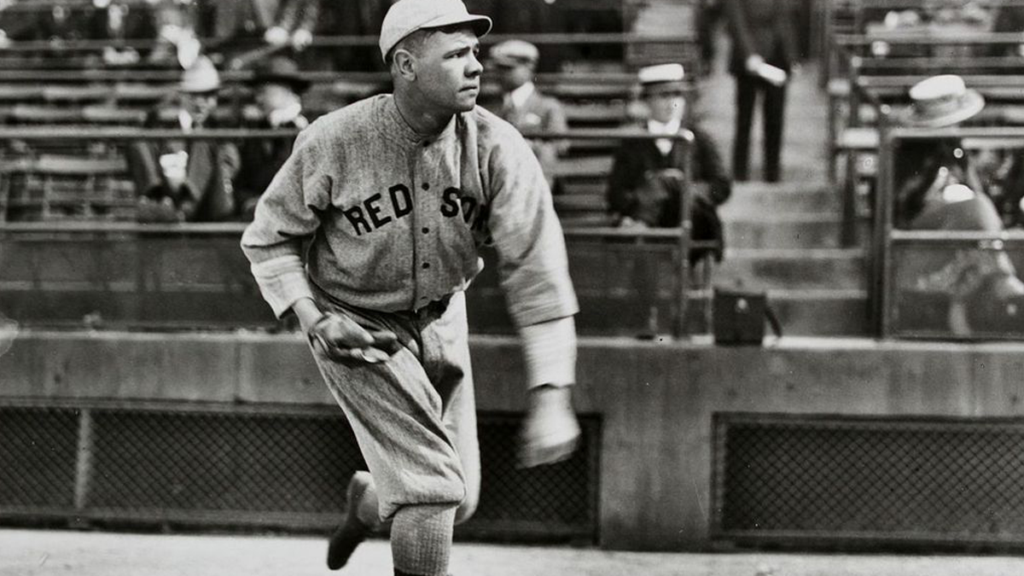
Babe Ruth. When he first joined the Boston Red Sox, a coach told the team not to give Ruth much trouble because he was the owner’s favorite new player, or “babe,” a common nickname given to rookies.
Braggo Roth. Cocky over leading the league with his seven home runs in 1915 earned Roth this braggadocious nickname.
Baby Doll Jacobson. After he started a game with a home run in one of his first professional games, a fan shouted out, “Oh you baby doll!” and the name stuck.
Get Uncle John's Know It All Bathroom Reader Today!
Tilly Walker. He apparently walked with the gait that reminded a teammate of a lady friend’s, and so he gave him the most feminine nickname he could imagine.
Candy Cummings. His curveball, which he invented, was as sweet and precious as candy.
Doc Prothro. He played professional baseball while attending dental school.
Hot Potato Hamlin. This pitcher had a curious routine on the mound: He’d juggle the ball a bit before he pitched it, as if he were handling a hot potato.
Casey Stengel. He was from Kansas City, which evidently was such a novelty that other players called him K.C., which over time evolved into Casey.
Rube Waddell. In circus folk slang, “rube” meant “dumb” and “from the country.” Rube Waddell was kind of eccentric and was raised in a rural area, hence the name.
Boom Boom Beck. This outfielder was prone to fits of anger, such as the time he got mad and threw a ball against a high fence, leading to a loud and destructive crash.
Hack Wilson. A popular wrestler of the 1920s was a grappler named Hackenschmidt. Hack Wilson sort of looked like him.
Noodles Hahn. When he was a child in Tennessee, Frank Hahn acquired the name everyone called him because every day he delivered his father’s lunch to his piano factory: noodle soup.
Pud Galvin. Supposedly he was such a dominant pitcher that he caused opposing batters to melt into a proverbial pudding-like state.