The stories behind these Halloween words and phrases aren’t spooky — the words themselves are. Boo!
Spooktacular
Clearly a mashup of “spooky” and “spectacular,” spooktacular is a modern word used to describe all that’s wonderful about the Halloween season. It entered into mainstream, common usage around 2004, but it’s a shockingly old word. Its first use was in an 1897 article in the Christian Observer newspaper recounting a Halloween party in which blindfolded people touched slimy everyday items and were amusingly led to believe the things were ghoulish. Reporter Laura A. Smith found it to be all rather “spooktacular.”
Ghost
Before modern English there was Middle English, and in that form, a ghost was a gost, altered from the even older Old English word gast, which referred to any kind of supposed supernatural being, including spirits, wisps of the dead, angels, and demons. The image of a humanoid ghost wandering around the realm of the living originates in the late 14th century, why which point the Germanic gaistaz had entered into several European languages.
Jack-o’lantern
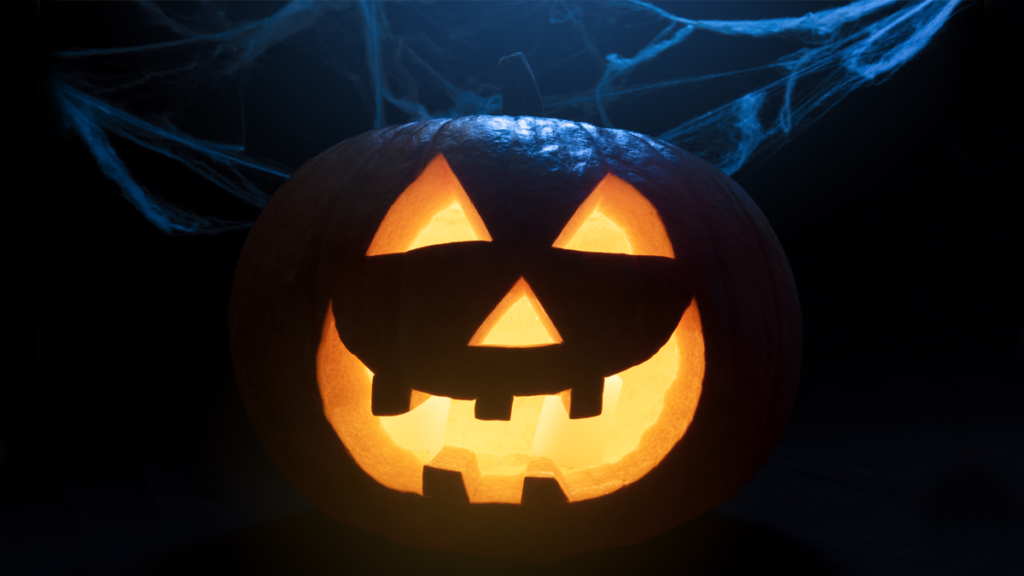
Since the 1800s, Americans have decorated for Halloween with hollowed-out, candlelit from within pumpkins with carved faces. In the centuries before that, communities in the British Isles marked All Hallows Eve with a carryover from pagan celebrations: turnips and other root veggies received strange faces and lit with coal embers in order to deflect evil spirits said to walk the earth on or around October 31. By the 1600s, no matter the vegetable used, Britons called them jack-o’-lanterns. “Jack” was a generic name for a man whose real name wasn’t known, and a lantern-toting night watchmen might be known as a jack-o’-lantern, too. The Halloween staple resembled those guys, if not in looks but in practice of lighting up the night.
Cobwebs
“Webb” is an Old English word for woven fabric. Spiderwebs are silken traps woven by a spider, which in Old English were called a spiora. An especially fearsome, nasty, and potentially deadly spider was more likely to be known as an atorcoppe, which quite literally means poison head — “ator” means poison and “coppe” means head, as spiders are mostly head. Old English speakers wound up abbreviating all that to just coppe, which in turn would spin a coppewebb, modernized and shortened over the centuries into cobwebs, a hallmark of any haunted house, intentionally or accidentally.