
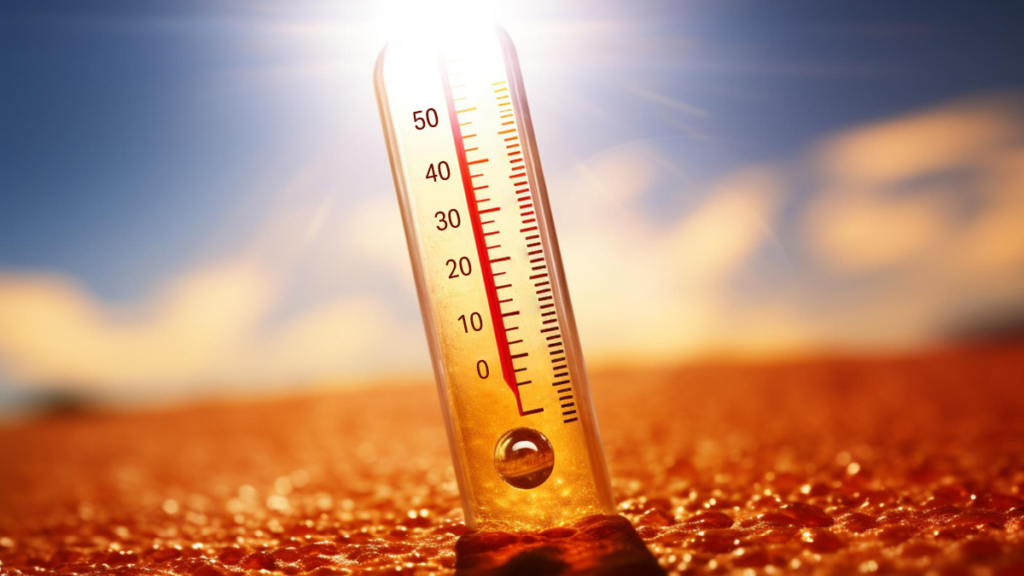
Well, besides the fact that it’s August, and it’s just hotter in the throes of summer. But you still might feel it’s hotter than what the thermometer says — that’s because of a weather metric called the Heat Index.
You’ve probably heard the phrase, “It’s not the heat, it’s the humidity,” referring to how a hot and sunny day can feel even hotter, sunnier, and more unbearably uncomfortable in places where there’s a dense and muggy wetness in the air. That old aphorism is partially true — as it turns out it’s the heat and the humidity that make for those sweltering summer days. Combining the heat with the humidity level creates something that forecasters call apparent temperature. It’s sort of the summer or fiery hot version of winter’s wind chill, which calculates a number on the thermometer that it “feels” like by combining the temperature with icy cold winds. The apparent temperature is what it “feels” like, too.
When we (or the weather person on TV) says “temperature,” that’s short for air temperature. That’s the thermometer reading. And when that number is high, humans sweat as a coping mechanism and a temperature regulating measure. Getting rid of bodily fluids through our pores helps keep our body temperature at a healthy level, but if it’s too hot, the sweat doesn’t evaporate, but rather stays right there on the skin, making it tough or impossible for the body to cool down. The rate by which the body sweats and evaporates decreases when the other part of apparent temperature, the relative humidity or atmospheric moisture, rises. Higher humidity means there’s so much hot water in the air that it makes you feel warmer down to a molecular level, as you’re unable to sweat enough to deal with it.
When air temperature combines with humidity, that makes the apparent temperature a much higher (and alarming number). Say that the air temperature outside is 100°F, according to the thermometer. If the humidity is at just a moderate level of 55%, the total, final Heat Index reading is what it feels like to the human senses — roughly 124°F, per the formula.
So, stay cool, and don’t sweat it. Or, actually, if you can, do sweat it.